
Pastor's Life
Personal Bible Reading for Pastors: Not Just for Sunday
Personal Bible reading for pastors is easier to protect with one rule: read a book of the Bible you are not preaching, and let nothing in it become sermon material until you finish the book. Keep the readings short, and daily if you can. The rule gives you a place in Scripture where nobody is waiting for what you find.
Say you sit down on a Monday morning with a psalm. You have no plan for it. Four verses in, you notice that the second line answers the first, and it would preach. You reach for a pen. Ten minutes later you have an opening, two points, and a possible series title. You have not prayed. The psalm asked you something in verse three, and you walked right past the question to write down how you would ask it of others.
Nothing about that morning was lazy. You did what you are trained to do, and that is why it is so hard to stop.
Why do pastors stop reading the Bible for themselves?
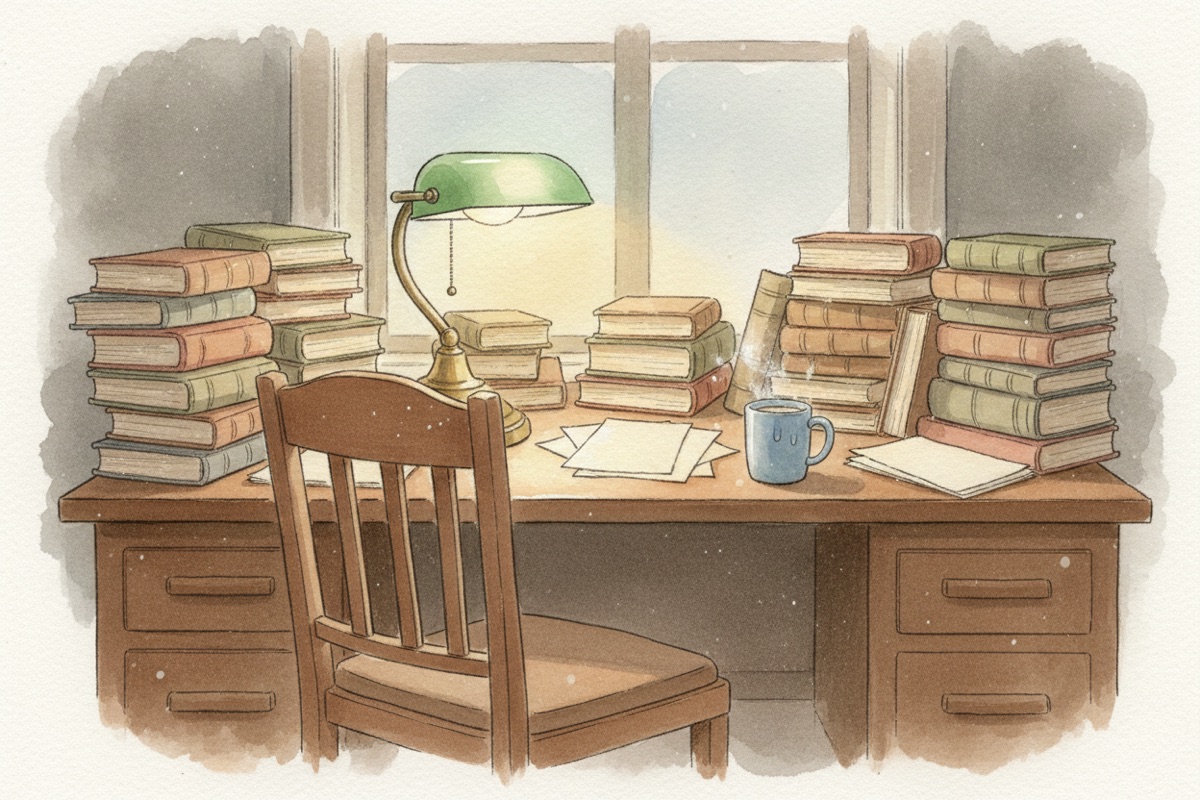
Often it is because the Bible is also their work, and the work has a deadline. Sunday comes every seven days. The same book lies open on the same desk, and the sermon usually has the stronger claim on it. Over time you may find you open the Bible only when you need something from it.
This can go on for a long time without anyone noticing, including you. You are in Scripture every day. You can quote it at a bedside. If someone asked when you last read the Bible, you would say this morning, and it would be true. The harder question is when you last read a passage that had no listener but you.
Paul asks a question that should make any preacher sit up: “you, then, who teach others, do you not teach yourself?” (Romans 2:21, BSB). He is confronting people who boast in the law while breaking it, which is worse than reading only for work. But the question still reaches into a study. You can get so used to handing on the word that you stop sitting under it.
Does sermon prep count as personal devotions?
It counts, but I don't think it should be the only time you read. Hours spent in a passage can feed you. If your own text has ever undone you on a Thursday, you know that is a gift. And if you treat study as plain work and devotions as the holy part, your study may grow colder than it should be.
Still, sermon prep comes with a question built into it: what will I say? That is a good question, and your people need you to ask it. It just faces outward. Even when the passage exposes your own impatience, part of your mind may already be deciding how to illustrate impatience.
Prep also limits which parts of the Bible you hear. If you are preaching through Ephesians for five months, then for five months you are in Ephesians. Your own trouble that winter may be one that Job or Lamentations would name. You won't get there by following the preaching calendar.
What does the Bible ask of the person who teaches it?
It asks teachers to receive the word and live it as well as pass it on. The order in Ezra is worth memorizing: “For Ezra had set his heart to study the Law of the LORD, to practice it, and to teach its statutes and ordinances in Israel.” (Ezra 7:10, BSB). Between studying and teaching stands practicing. A sermon can be written without that middle step, and you may be the only one who knows it was skipped.
Paul tells Timothy, “Pay close attention to your life and to your teaching.” (1 Timothy 4:16, BSB). Timothy had plenty of public work to do. Just before this, Paul told him to devote himself to the public reading of Scripture, to exhortation, and to teaching (1 Timothy 4:13). His own life still needed watching, and it comes first in the sentence.
There is a similar instruction for Israel's king in Deuteronomy. He was to write out a copy of the law for himself (Deuteronomy 17:18), and “he is to read from it all the days of his life, so that he may learn to fear the LORD his God” (Deuteronomy 17:19, BSB). The passage first names what the reading would do in him. He would learn to fear God and keep these words, and his heart would not be exalted above his countrymen (Deuteronomy 17:19-20). You are not a king. But if a man with that much authority needed to read with his own heart in view, a preacher should not assume an exemption.
How can a pastor read the Bible without turning it into a sermon?
Read a book you are not preaching, and let nothing in it become sermon material until you finish the book. No quotes for the newsletter, no outline in the margin. Scripture doesn't give this rule. It is one practical way to make room for what Scripture does ask.
I know how that sounds. It is hard to waste a good idea, and it can feel irresponsible to find something true and not give it to the people who need it. But as long as everything you read may be used, part of you will read for use. A rule takes the decision away. You don't have to ask each morning whether this one is too good to leave alone, because you already answered.
The rule has an end, too. When you finish the book you may use anything you like. By then you will have lived with it for a while.
One exception is plain. If a friend calls in grief and the passage you read at breakfast is what they need, give it to them. The rule is there to break the habit of reading for material, and love for the person on the phone comes first. And if you break the rule one week, go back to reading. You don't have to start over.
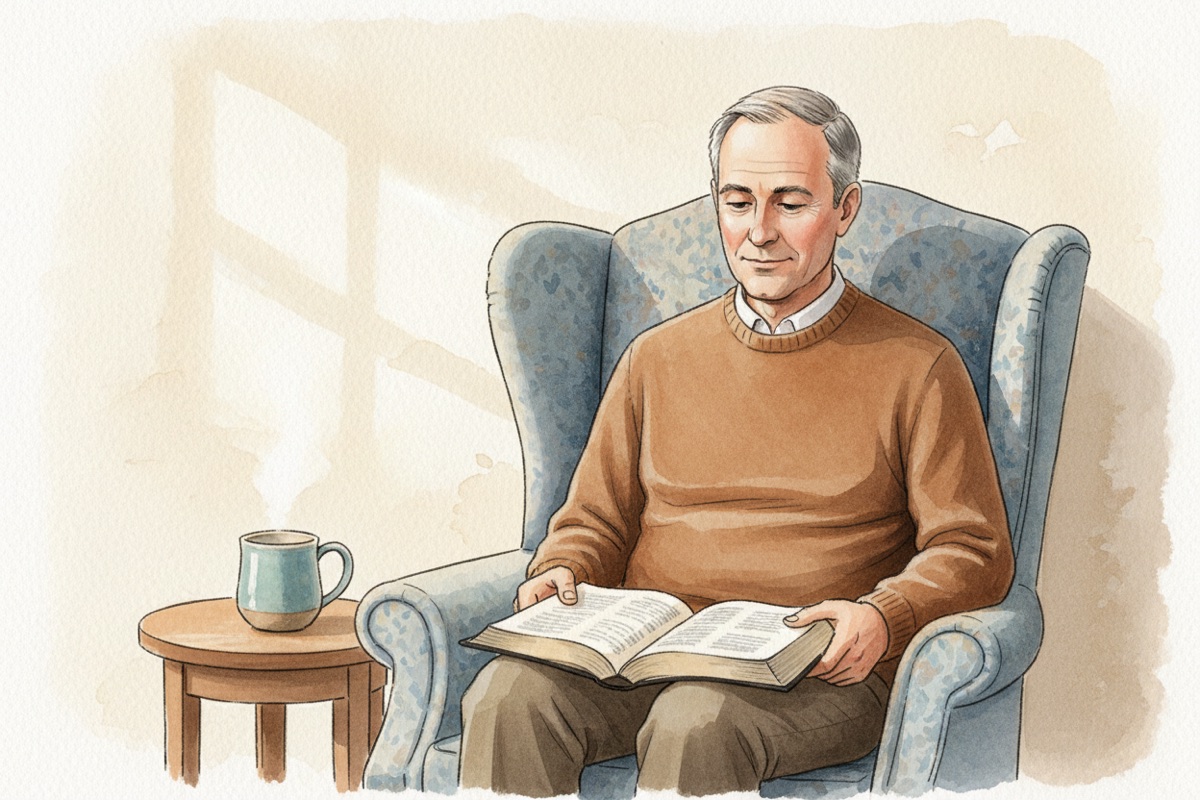
How do you keep the rule in a real week?
Make it small and physical, so that it doesn't depend on how the week is going. Here is one way.
- Pick the book. Choose one that is far from your current series and that you don't plan to preach soon. The distance from your pulpit can make it easier to hear the passage as addressed to you. Start with a shorter book so you can finish it, and read it straight through. If you are preaching a letter, try Ruth or Habakkuk. If you are in Genesis, try Mark. If you follow a lectionary, pick a book that isn't in this season's readings.
- Use a different Bible and a different chair. A copy with no sermon notes in it helps. So does a seat where your laptop isn't open.
- Pray, then read a short portion aloud. “Open my eyes that I may see wondrous things from Your law.” (Psalm 119:18, BSB) is prayer enough. Then read ten or fifteen verses. Reading aloud slows you down and makes it harder to skim. Scripture doesn't set a number of minutes, and ten you keep is a better start than an hour you give up on.
- Ask questions that face you. What does this say about God? What is He asking of me, or promising me? Skip "How would I explain this?" for now.
- Answer in prayer, not in notes. One honest sentence back to God will do.
- Keep a card and an envelope. When a sermon idea comes, and it will, write one line on the card and slip it in the envelope. Then go back to the verse. Open the envelope when you finish the book.
The envelope answers the fear that the idea will be lost. It won't be, and you can keep reading.
If a week falls apart, do not try to catch up. Open to the next portion and read it. A week with a funeral in it is not a failure.

Can AI or a devotional guide do this for you?
No. I would keep both out of this reading, though they can help elsewhere. A summary can tell you what a chapter says. Here you came to spend time with the chapter itself.
The devotional you prepare for your church doesn't replace it either. Sermoneer can draft a five-day devotional from the sermon you preached, and you can download it, edit it, and send it to your people. It starts from your sermon, though, and you have already spent the week there. Let your people have that one, and read something else yourself.
What if you read and feel nothing?
Keep reading, and tell God you feel nothing. Scripture makes room for that kind of honesty. Jeremiah could say, “Your words were found, and I ate them. Your words became my joy and my heart’s delight.” (Jeremiah 15:16, BSB). Two verses later he asks God why his pain has no end (Jeremiah 15:18). His pain came from what his calling had cost him, which is different from a dry morning. But he took the joy and the complaint to the same God.
The first weeks may feel flat for another reason. Reading without producing anything can seem like doing nothing when you are used to leaving the desk with a page in your hand. Give it a few weeks before you judge it.
Dryness that spreads is different. If the numbness goes past your reading into your sleep, your family, and everything you used to enjoy, talk to a trusted friend and see a doctor or counselor. If it is mostly the sermon work that has drained you, preaching when you're running on empty may help with this Sunday.
Where should you start this week?
Pick the book today and tuck an envelope inside the Bible you will use. Tomorrow, before you open your sermon file, read the first ten verses aloud and answer them with one sentence of prayer. Then close the Bible and go to work. What you found can stay with you for now.
Try Sermoneer
One sermon becomes a week of material: small group guide, devotional, social cards, and shorts.
Start free