
Devotional
John 21:15-19 Devotional: Peter Restored at Breakfast
In John 21:15-19, the risen Jesus restores Peter after his three denials. After breakfast by the sea, He asks Peter three times, “Do you love Me?” Each time Peter answers, Jesus gives him work: feed My lambs, shepherd My sheep, feed My sheep. Then He calls Peter again with two words: “Follow Me” (John 21:19, BSB).
Think of the worst thing you have done to someone who trusted you. Now picture sitting down to eat with that person, and neither of you has mentioned it yet.
That is where Peter is in John 21. He has seen Jesus alive. He has jumped out of a boat to get to Him. John records no talk of the denial yet. Then breakfast ends, and Jesus turns to him.
When they had finished eating, Jesus asked Simon Peter, “Simon son of John, do you love Me more than these?” “Yes, Lord,” he answered, “You know I love You.” Jesus replied, “Feed My lambs.” Jesus asked a second time, “Simon son of John, do you love Me?” “Yes, Lord,” he answered, “You know I love You.” Jesus told him, “Shepherd My sheep.” Jesus asked a third time, “Simon son of John, do you love Me?” Peter was deeply hurt that Jesus had asked him a third time, “Do you love Me?” “Lord, You know all things,” he replied. “You know I love You.” Jesus said to him, “Feed My sheep.” (John 21:15-17, BSB)
Why did Jesus ask Peter three times?
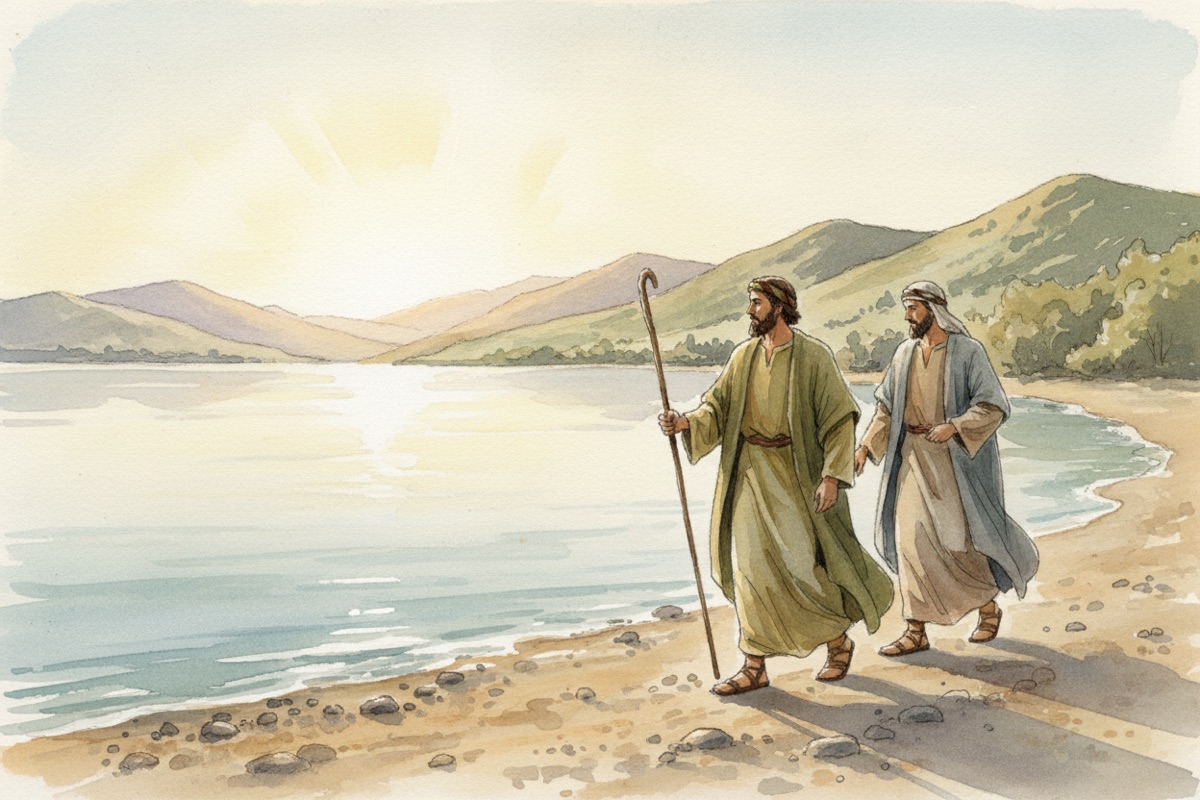
Most readers see the three questions as answering Peter's three denials. John sets up the scene with a detail he uses only twice in his Gospel. When the disciples landed, “they saw a charcoal fire there with fish on it, and some bread” (John 21:9, BSB). The only other charcoal fire in John is in the high priest's courtyard, where Peter was “standing with them, warming himself” (John 18:18, BSB). When they asked whether he was one of the disciples, he said, “I am not” (John 18:25, BSB).
So Peter is standing by a fire again. Last time, he was asked three times whether he was one of His disciples. This time, he is asked three times whether he loves Him.
Jesus also calls him by an old name. On the first day they met, Jesus said to him, “You are Simon son of John” (John 1:42, BSB). Some see this as Jesus taking Peter back to the beginning.
What does “more than these” mean?
John does not say exactly what “these” refers to. Many readers take it as the other disciples. On the night before the cross, Peter declared, “Even if all fall away, I never will” (Mark 14:29, BSB). Others read “these” as the boats and nets, the old life Peter had gone back to.
Notice how Peter answers. He does not compare himself to anyone. He just says, “You know I love You.” The boasting is gone. By the third question, he is “deeply hurt,” and his answer leans even less on himself: “Lord, You know all things” (John 21:17, BSB).
Peter has stopped pointing to his own promises. He points to what Jesus sees.
What does “feed My sheep” mean?
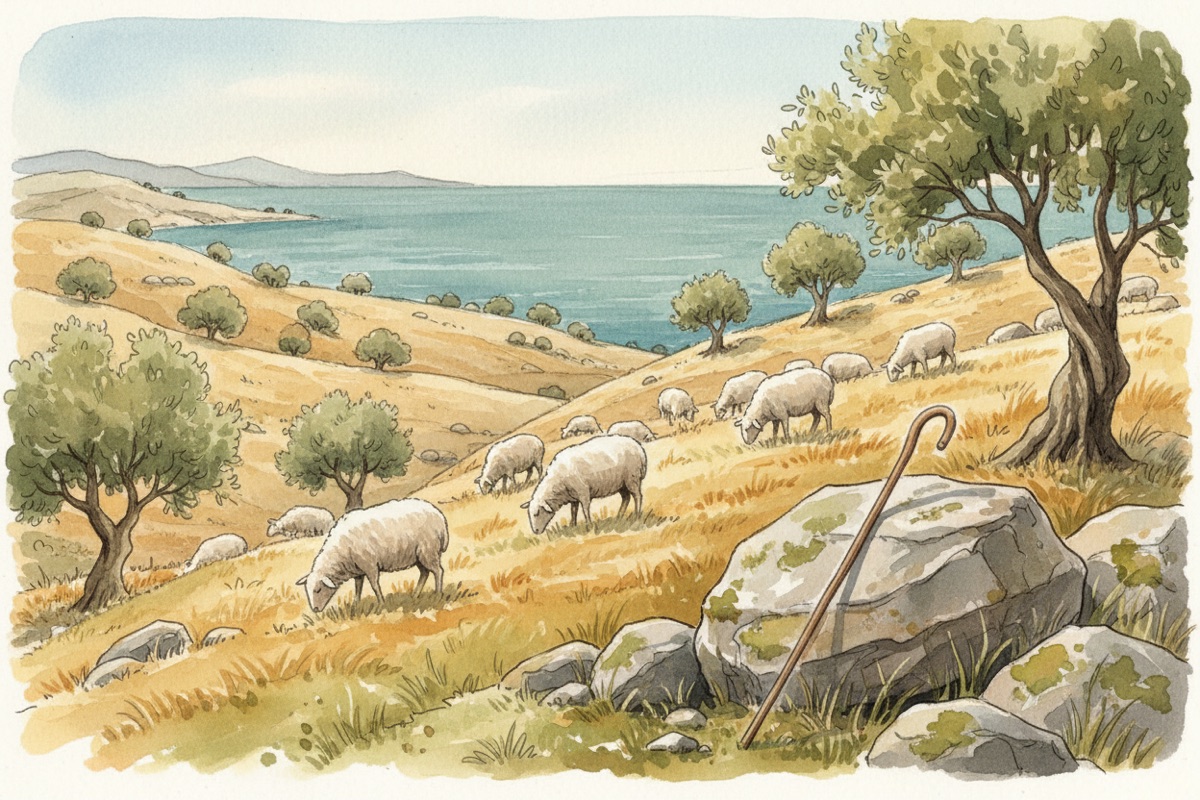
It means Jesus is giving Peter the care of His people. Every time Peter says yes, Jesus hands him a job. Feed My lambs. Shepherd My sheep. Feed My sheep.
Look at the word “My.” The sheep belong to Jesus. Peter is not given his own flock. He is trusted with someone else's, and it is the flock of the one he denied.
That is the surprise of this passage. Jesus does not restore Peter to a back seat. He does not say, “I forgive you, but you are done serving.” He gives the man who failed the care of the people He loves.
Where does following Jesus lead Peter?
It leads him to a hard road and, in the end, to death. Jesus tells him plainly:
Truly, truly, I tell you, when you were young, you dressed yourself and walked where you wanted; but when you are old, you will stretch out your hands, and someone else will dress you and lead you where you do not want to go. (John 21:18, BSB)
John explains that this pointed to “the kind of death by which Peter would glorify God” (John 21:19, BSB). Peter had promised, “I will lay down my life for You” (John 13:37, BSB), and then failed. Jesus now tells him he will get to keep that promise after all. He will keep it by following.
Then come the last words: “Follow Me.” On the night he made his promise, Jesus had told him, “you cannot follow Me now, but you will follow later” (John 13:36, BSB). Now the time has come.
What does John 21 mean for you today?
It means your failure is not the end of your calling. Jesus did not pretend the denial never happened. Without naming it, He walked Peter back through it, by a fire, three times.
If you lead people, you may carry a failure you think has disqualified you. Maybe a promise you made to your church and broke. You may still be doing the work, but quietly, like someone who expects to be asked to leave.
Jesus meets Peter there. He does not ask Peter to prove himself or to promise more. He asks one question: do you love Me? Then He gives the work back.
That does not mean failure carries no consequences. Peter would always be known as the disciple who denied Jesus. Still, the last word Jesus spoke to him in this scene was “Follow Me.”
If you want another picture of grace that runs to meet a failure, the Luke 15 devotional on the father and the returning son sits well beside this one.
A prayer
Lord Jesus, You know all things. You know where I have failed You, and You know I love You. Thank You for meeting me in my failure and not leaving me there. Give me back the work You have for me. Help me feed the people You have entrusted to me, and remember they are Yours. And when the road goes where I would not choose, help me keep following You.
Questions for reflection
- Is there a failure you have never let Jesus talk with you about? What would it mean to answer His question, “Do you love Me?” honestly today?
- Who are the people Jesus has asked you to feed this week, and how would you care for them differently if you remembered they are His?
Try Sermoneer
One sermon becomes a week of material: small group guide, devotional, social cards, and shorts.
Start free