
Devotional
2 Corinthians 12:9-10 Devotional: My Grace Is Sufficient for You
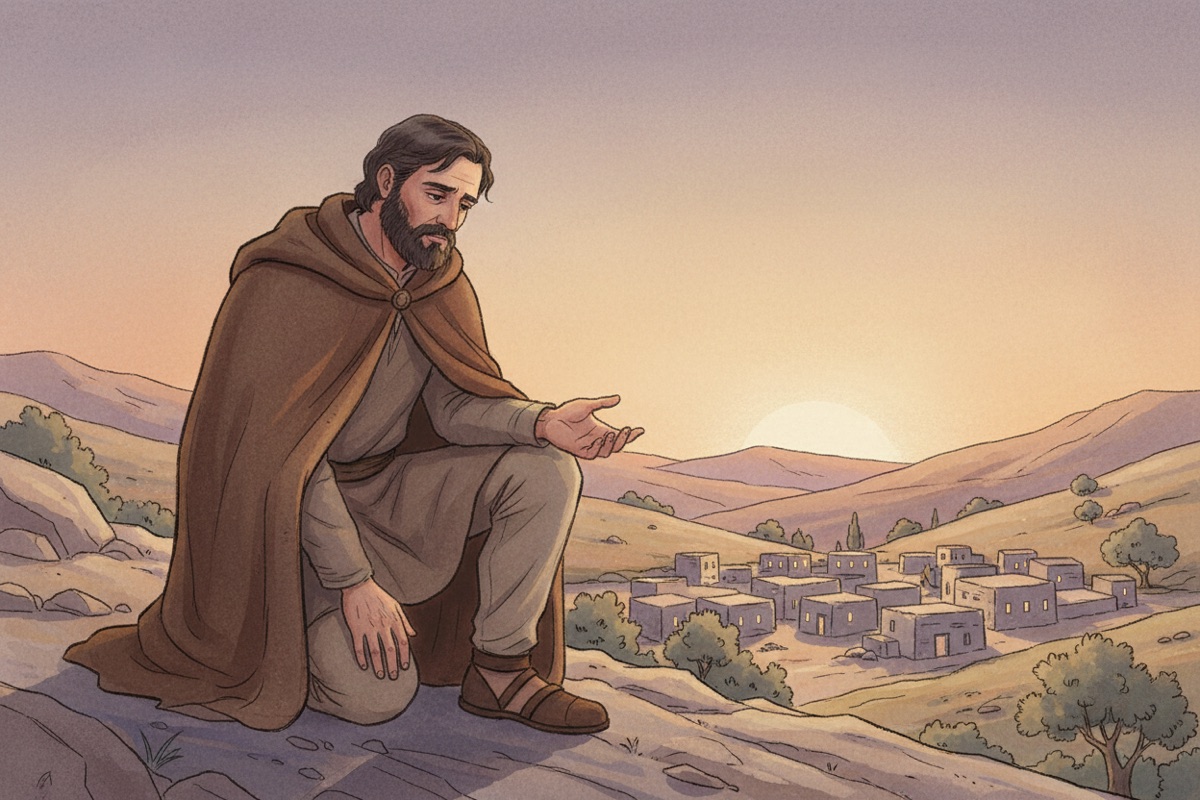
In 2 Corinthians 12:9-10, Paul asks the Lord three times to remove a painful thorn in his flesh. The Lord says no and gives him a promise instead: “My grace is sufficient for you, for My power is perfected in weakness.” (2 Corinthians 12:9, BSB). Paul learns that Christ's power rests on him in his weakness.
You have probably prayed a prayer like Paul's. Take this away. Fix this. You prayed it more than once. Maybe the thing is still there this morning.
What does 2 Corinthians 12:9-10 say?
2 Corinthians 12:9-10 says that God answered Paul's plea for relief with grace instead of removal, and that Paul came to boast in his weaknesses so that Christ's power may rest on him.
So to keep me from becoming conceited, I was given a thorn in my flesh, a messenger of Satan, to torment me. Three times I pleaded with the Lord to take it away from me. But He said to me, “My grace is sufficient for you, for My power is perfected in weakness.” Therefore I will boast all the more gladly in my weaknesses, so that the power of Christ may rest on me. That is why, for the sake of Christ, I delight in weaknesses, in insults, in hardships, in persecutions, in difficulties. For when I am weak, then I am strong. (2 Corinthians 12:7-10, BSB)
Notice what the Lord does not say. He does not explain the thorn or say when it will end. He tells Paul what will be enough.
Why was Paul writing about weakness?
Paul was answering people in Corinth who measured leaders by strength. Some teachers there had impressed the church with their speaking and their credentials, and they looked down on Paul. So in chapters 11 and 12 he does something odd. He boasts, but he says, “If I must boast, I will boast of the things that show my weakness.” (2 Corinthians 11:30, BSB).
He lists beatings, shipwrecks, sleepless nights, and hunger. Then he adds, “Apart from these external trials, I face daily the pressure of my concern for all the churches.” (2 Corinthians 11:28, BSB). Any pastor can read that line and nod.
Right before our passage, Paul describes being caught up to Paradise. His critics seem to have prized visions and revelations. Paul tells his in the third person, says little about it, and turns to the thorn.
What was Paul's thorn in the flesh?
Paul never names it. He calls it “a thorn in my flesh, a messenger of Satan” (2 Corinthians 12:7, BSB). Readers have guessed at an illness, poor eyesight, or opponents who followed him from city to city. The text does not settle it, and we should not pretend it does.
That silence helps. Because the thorn has no name, you do not have to match Paul's exact trouble to hear what God said to him.
Verse 7 holds two things together. The thorn is called a messenger of Satan, yet it was given to keep Paul from becoming conceited. Something meant for harm was held inside God's purpose. Paul does not explain how that works. He simply prays, three times, and then he listens.
What does "My grace is sufficient for you" mean?
It means God's favor and help would be enough for Paul to carry what he asked to be rid of. The Lord answered the prayer. The answer was no, and it came with a promise.
The second half explains the first: “My power is perfected in weakness.” The thought runs through this letter. Earlier Paul wrote, “Now we have this treasure in jars of clay to show that this surpassingly great power is from God and not from us.” (2 Corinthians 4:7, BSB). Near the end he points to the cross: “For He was indeed crucified in weakness, yet He lives by God’s power.” (2 Corinthians 13:4, BSB).
So when Paul writes, “For when I am weak, then I am strong” (2 Corinthians 12:10, BSB), he is not praising weakness for its own sake. He had pleaded for the thorn to go. His strength is Christ's power resting on him.

What does this mean for you today?
It means your weakness does not disqualify you from serving Christ, and a prayer God has not granted is not proof that he has stopped listening.
Many pastors hide weakness well. You preach while you grieve. You smile at the door and drive home empty. Paul did not hide his thorn, and he did not pretend it was gone. He admitted it, prayed about it, and kept serving with it.
Say you are carrying something this week that you have asked God to remove. You can keep asking. Paul asked three times, and nothing in the passage scolds him for it. But you can also ask a second question: Lord, what would it look like for your grace to be enough for me today, with this still here?
The answer will likely be small. It might be one honest conversation with a friend, or a sermon preached without pretending you are fine. Sufficient grace usually comes one day at a time, like daily bread.
If this has been a heavy season for your preaching in particular, you may find some help in how to preach when you're running on empty.

A prayer
Lord Jesus, you know what I have asked you to take away. I am still asking. But if your answer today is no, let me hear your promise with it. Let your grace be enough for me this morning. Keep me from hiding my weakness behind a strong face. You were crucified in weakness and you live by the power of God. Let that power rest on me where my own strength has run out, so that the people I serve see you and not me.
Questions for reflection
- What have you asked God to remove more than once, and how would you describe it to him honestly today?
- Where might Christ's power be resting on you right now in a place you would rather keep hidden?
Try Sermoneer
One sermon becomes a week of material: small group guide, devotional, social cards, and shorts.
Start free