
Devotional
1 Kings 19 Devotional: Elijah and the Still, Small Voice
In 1 Kings 19, Elijah runs from Jezebel and asks God to take his life. God answers with bread, water, and sleep. Then He brings Elijah to Horeb and asks him a question. God is not in the wind, the earthquake, or the fire. He comes in a still, small voice.
Maybe you know the morning after a big Sunday. Something went right. People responded. Then Monday comes, one hard email lands, and all of it seems to drain out of you at once. You are more tired than the work explains.
Elijah knew a much bigger version of that.
And Elijah was afraid and ran for his life. When he came to Beersheba in Judah, he left his servant there, while he himself went a day’s journey into the wilderness. He sat down under a broom tree and prayed that he might die. (1 Kings 19:3-4, BSB)
What happened to Elijah after Mount Carmel?
Elijah collapsed right after his greatest public victory. In chapter 18, fire fell from heaven on Mount Carmel, and the people cried, “The LORD, He is God! The LORD, He is God!” (1 Kings 18:39, BSB). It looked like the turning point for the nation.
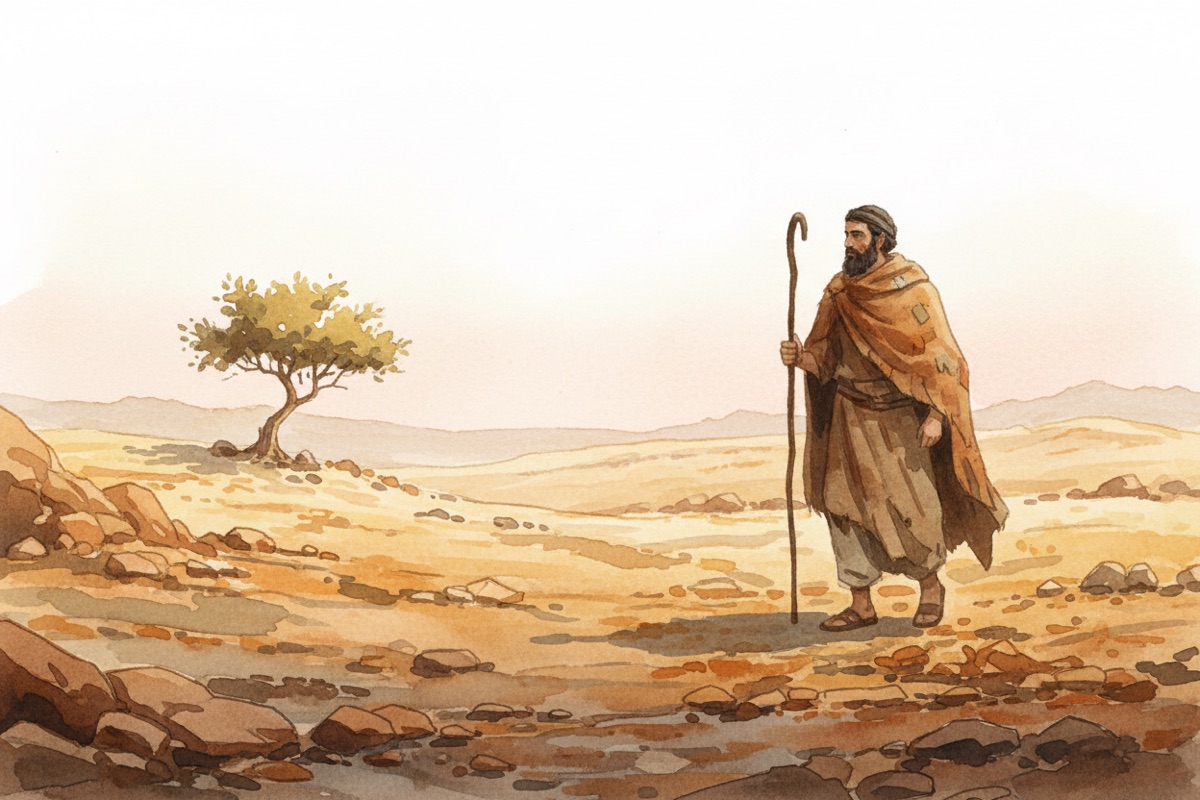
Then Jezebel sent one message. She swore that by the next day Elijah would be dead like the prophets of Baal. The queen had not repented. Ahab had simply reported to her. Elijah ran south, past Beersheba, alone, and lay down under a broom tree.
His prayer is short: “I have had enough, LORD” (1 Kings 19:4, BSB). Then: “Take my life, for I am no better than my fathers.” (1 Kings 19:4, BSB). This is a prophet who called down fire, and now he does not want to go on.
How did God answer Elijah's prayer to die?
God answered with food and sleep before He said a word about the mission. An angel touched him and said, “Get up and eat.” Elijah found “a cake of bread baked over hot coals, and a jar of water” (1 Kings 19:6, BSB). He ate and drank and lay down again.
The angel came a second time. “Get up and eat, or the journey will be too much for you.” (1 Kings 19:7, BSB). God gives no lecture and no order to pull himself together. He treats Elijah as a tired body as well as a discouraged soul.
Some of what Elijah felt was fear and grief. Some of it was a man who had run a long way and needed to eat.
What does the still, small voice mean?
It means God came near to Elijah quietly, after the loud things had passed. Strengthened by that food, Elijah walked forty days and nights to Horeb, the mountain of God, and spent the night in a cave. There God asked him, “What are you doing here, Elijah?” (1 Kings 19:9, BSB). Then the Lord told Elijah to stand before Him.
And a great and mighty wind tore into the mountains and shattered the rocks before the LORD, but the LORD was not in the wind. After the wind there was an earthquake, but the LORD was not in the earthquake. After the earthquake there was a fire, but the LORD was not in the fire. And after the fire came a still, small voice. (1 Kings 19:11-12, BSB)
Other English translations say "a gentle whisper" or "a low whisper." The point is the contrast. Wind, earthquake, and fire were signs the Lord had used before. Fire had just fallen at Carmel. On this day, with this worn-out prophet, God came quietly.
When Elijah heard the voice, he covered his face with his cloak and went out to the mouth of the cave. And God asked him the same question He had asked before: “What are you doing here, Elijah?” (1 Kings 19:13, BSB).
What did Elijah tell God at Horeb?
Elijah told God he was the only faithful one left. Both times God asked the question, Elijah gave the same answer, and God let him say all of it: “I am the only one left, and they are seeking my life as well.” (1 Kings 19:10, BSB). God did not cut him off.
The story does not end at verse 13. God sends Elijah back with work to do, and He corrects the loneliness with a fact. Seven thousand in Israel had not bowed to Baal: “I have reserved seven thousand in Israel” (1 Kings 19:18, BSB). Elijah only felt like the last one.

What does 1 Kings 19 mean for you today?
It means your exhaustion does not shock God, and His first answer to it may be very ordinary. Eat something. Sleep. Then listen.
If you serve in ministry, you may expect God to meet you only in the big moments: the full room, the response at the end of the service. Those moments are real. But Elijah found that the high point did not carry him through the next day. What carried him was bread under a tree and a voice he had to be quiet enough to hear.
It also means you are probably less alone than you feel. When you are worn out, your count of who is still faithful gets very small. God's count is larger. If this sounds like your season, the article on preaching when you're running on empty may help with the week ahead.
A prayer
Lord, You see me under my own broom tree. You know when I have had enough. Thank You that You did not answer Elijah with a rebuke, and that You meet me with the same care. Give me the rest my body needs. Quiet the noise in me long enough to hear You. When I think I am the only one left, show me the people You have kept. Then send me back to the work You have for me.
Questions for reflection
- Is your weariness right now more in your body, your heart, or both? What ordinary care have you been skipping?
- If God asked you, "What are you doing here?", what would you honestly say?
Try Sermoneer
One sermon becomes a week of material: small group guide, devotional, social cards, and shorts.
Start free