
Pastor's Life
Why One Sermon a Week Isn't Enough for Discipleship
One sermon a week isn't enough for discipleship because a sermon calls people to obey, and obedience is learned during the week, by doing, with others. Preaching is central. But Jesus said to teach people to obey, and the obeying happens on Tuesday. A pastor's work includes building a small path from Sunday into the week.
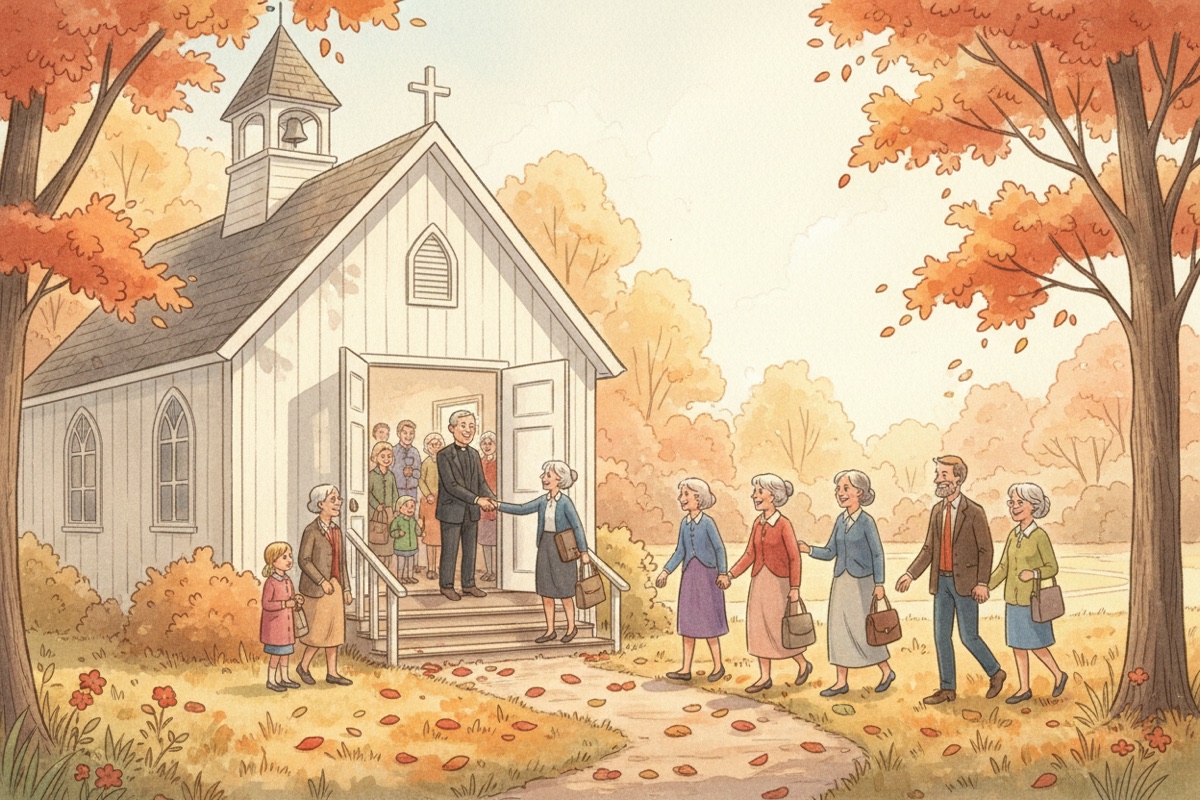
Picture the handshake line after the service. "Great word, Pastor." "That really spoke to me." You go home tired and grateful. By Wednesday, the sermon that moved them is competing with a full inbox, a sick kid, and a hard conversation at work. Hearing and doing are different things, and Sunday only has room for the first.
Isn't preaching the main way churches make disciples?
Preaching is one of the main ways. Through it God speaks to his people, and it is central in the life of the church. The question is whether it was meant to work alone.
Look at how Jesus framed the task. “Therefore go and make disciples of all nations, baptizing them in the name of the Father and of the Son and of the Holy Spirit, and teaching them to obey all that I have commanded you.” (Matthew 28:19-20, BSB). The aim of the teaching is obedience. Teaching that never reaches obeying has stopped short of what Jesus asked for.
The first church also kept more than one practice. “They devoted themselves to the apostles’ teaching and to the fellowship, to the breaking of bread and to prayer.” (Acts 2:42, BSB). Teaching comes first in that list. It does not stand by itself.
Why don't people change after hearing a good sermon?
People often don't change after a good sermon because hearing is a moment, and change happens when they act on what they heard, often days later. God works through his word, and Scripture places that word inside a life of obedience and fellowship.
James puts it bluntly. “Be doers of the word, and not hearers only. Otherwise, you are deceiving yourselves. For anyone who hears the word but does not carry it out is like a man who looks at his face in a mirror, and after observing himself goes away and immediately forgets what he looks like.” (James 1:22-24, BSB).
The man in the mirror is not rejecting what he saw. He simply walks away and forgets. Sermons can go the same way. Nobody argues with your point about forgiveness. They just go to work on Monday, and the person they need to forgive is in the next cubicle, and the sermon is far away.
Jesus ends the Sermon on the Mount with the same line. The wise builder is “everyone who hears these words of Mine and acts on them” (Matthew 7:24, BSB). Both builders heard. One acted.

What did discipleship look like in the Bible?
In the Bible, discipleship looks like life shared over time, with teaching woven into ordinary days.
Moses told parents to keep God's words on their hearts and teach them to their children, and to “speak of them when you sit at home and when you walk along the road, when you lie down and when you get up” (Deuteronomy 6:6-7, BSB). That is teaching at the kitchen table and on the road, not only in an assembly.
Jesus preached to crowds. Then, Mark says, “privately He explained everything to His own disciples.” (Mark 4:34, BSB). He appointed the twelve “to accompany Him, to be sent out to preach” (Mark 3:14, BSB). In Mark, the being with him comes before the sending. They watched him, asked their questions, failed, and tried again.
Paul did the same. “Whatever you have learned or received or heard from me, or seen in me, put it into practice.” (Philippians 4:9, BSB). Heard, and also seen. And he expected the whole church to carry the word to each other, not only the preacher: “Let the word of Christ richly dwell within you as you teach and admonish one another” (Colossians 3:16, BSB).
What should a pastor add to the sermon?
A pastor should add one practice, one conversation, and one follow-up to each sermon. It does not take more content.
One practice. Before you finish writing, ask what one thing a person could do this week because of this text. One, rather than a list of five applications. If you preached on forgiveness, it might be: write down the name of one person you are holding a debt against, and pray for them by name each morning until Sunday.
One conversation. People need somewhere to say, "I tried that, and it was harder than I thought." That might be your small groups, a family dinner table, or two friends who text each other. You do not have to run this conversation. You only have to point people toward it and give them the question. If your groups already meet, the practice can become their first discussion question.
One follow-up. Next Sunday, before the new sermon, take two minutes to return to last week's practice. "Last week I asked you to pray for one person by name. Here is what happened when I did." This one habit tells your church that the sermon expected something of them, and that you will ask again.
Hebrews says to “exhort one another daily, as long as it is called today” (Hebrews 3:13, BSB). Daily, and one another. A weekly sermon can start that habit. It cannot replace it.
Doesn't this put more on an already tired pastor?
It puts less on you than another sermon would. The practice is one sentence you write while finishing the manuscript. The follow-up is two minutes on Sunday. The conversation is carried by your people.
In fact, the alternative is heavier. When the sermon is the only place discipleship happens, every Sunday has to carry everything. Each message has to be strong enough to change a life on its own. That is a weight no preacher was meant to carry alone.
Paul told Timothy to entrust what he had heard “to faithful men who will be qualified to teach others as well” (2 Timothy 2:2, BSB). One way to share the load is to train a few people who can lead those weekday conversations. Your part is to preach faithfully and help the word move from the pulpit into ordinary life.

How will you know if it is working?
You will know it is working when you start hearing stories from the middle of the week.
Attendance will not tell you. Neither will the handshake line. What tells you is a member saying in October, "I have been praying for my brother every morning since that sermon in August." Or a small group leader saying the group spent the whole night on last week's practice because two people tried it and it went badly.
Those stories will be few at first. Ask for them. Ask three people a month, "Did anything from Sunday make it to your Wednesday?" Their answers will tell you more about your preaching than any compliment at the door.
You know your church, and you will judge what kind of practice fits it. Start with next Sunday's sermon: give one practice, and ask about it again a week later.
Try Sermoneer
One sermon becomes a week of material: small group guide, devotional, social cards, and shorts.
Start free