
Devotional
Psalm 46 Devotional: Be Still and Know That I Am God
Psalm 46 says God is our refuge and strength, so his people do not have to fear even when the earth is shaken. Its most famous line, "Be still and know that I am God," is a command to stop striving and recognize who God is. It was first sung by people with raging nations around them.
Most of us read "be still" as an invitation to a quiet morning, with a candle and a chair by the window, which is good. But Psalm 46 is a loud psalm. Mountains topple into the sea, and nations rage. The command to be still comes in the middle of that noise, which is why it helps on a loud week.
What does Psalm 46 say?
Psalm 46 says God is with his people, so they need not fear when the earth shakes or the nations rage. It moves from the shaking earth, to a city kept safe, to wars brought to an end.
God is our refuge and strength, an ever-present help in times of trouble. Therefore we will not fear, though the earth is transformed and the mountains are toppled into the depths of the seas, though their waters roar and foam and the mountains quake in the surge. Selah (Psalm 46:1-3, BSB)
There is a river whose streams delight the city of God, the holy place where the Most High dwells. God is within her; she will not be moved. God will help her when morning dawns. (Psalm 46:4-5, BSB)
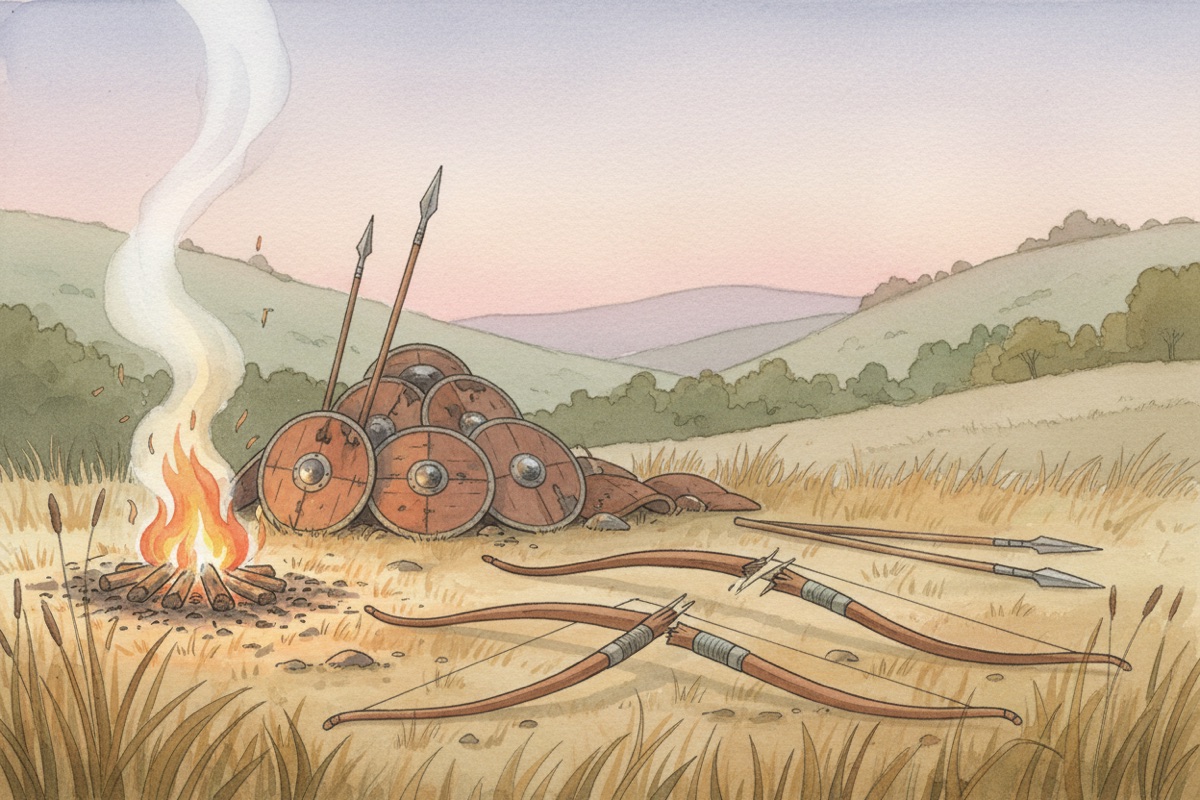
Come, see the works of the LORD, who brings devastation upon the earth. He makes wars to cease throughout the earth; He breaks the bow and shatters the spear; He burns the shields in the fire. (Psalm 46:8-9, BSB)
Twice, in verses 7 and 11, the psalm stops and says the same thing:
The LORD of Hosts is with us; the God of Jacob is our fortress. Selah (Psalm 46:7, BSB)
The refrain is the psalm's backbone. It holds steady while everything else shakes.
What was Psalm 46 written for?
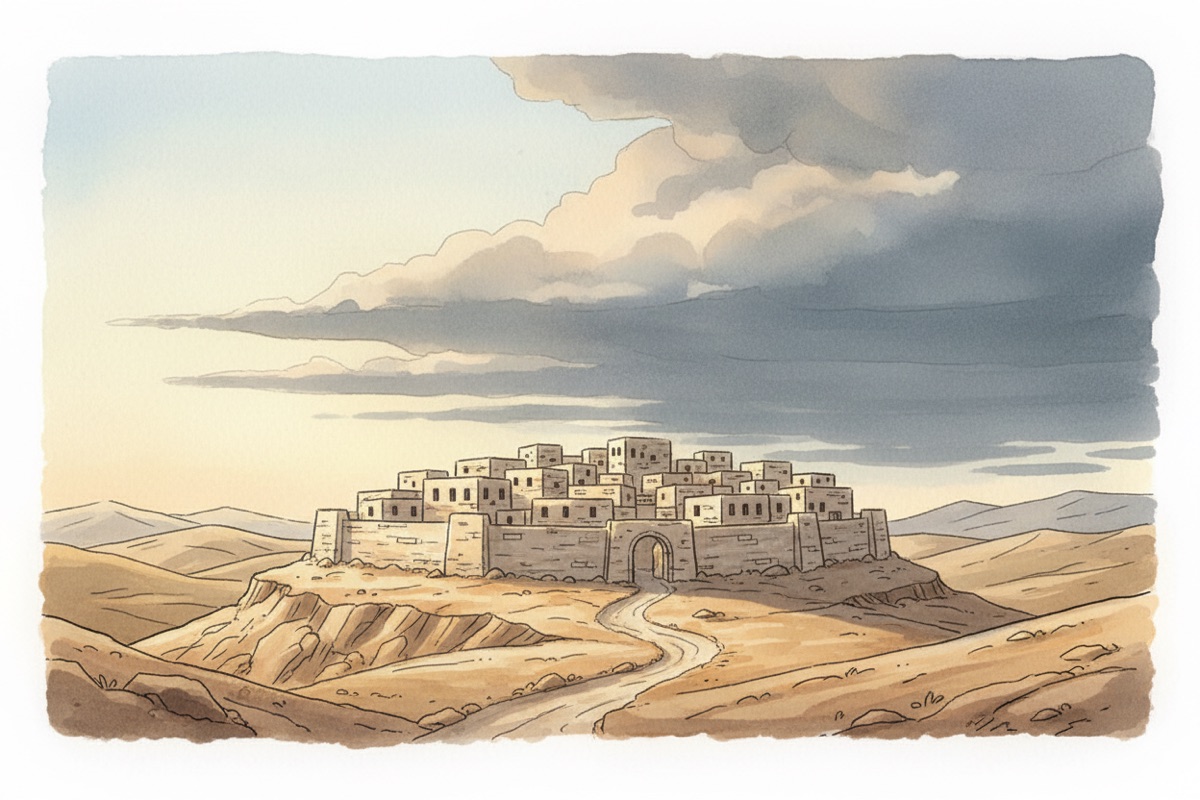
Psalm 46 is a song celebrating God as the protector of his city, the place where he dwells, which Israel understood as Jerusalem. The heading credits it to the sons of Korah, a family of Levite singers. It is often grouped with Psalms 48 and 76 as songs of Zion, psalms that praise God for keeping his city safe from its enemies.
The psalm does not name a specific crisis, so it is wise not to tie it too tightly to one. What it does show is a city with raging nations around it and the ground itself unsteady. Notice the river in verse 4. Jerusalem had no great river like the Nile or the Euphrates. It lived on a spring and stored water. So the river is a picture of God's own presence. The city lives on God, who is within her, more than on anything it can see.
Then the small detail at the end of verse 5: “God will help her when morning dawns.” (Psalm 46:5, BSB). Night is when a city under threat waits and listens. The psalm promises the night will not have the last word.
What does "be still and know that I am God" mean?
"Be still and know that I am God" means stop striving and recognize who God is. The verb carries the sense of letting go, of dropping your hands.
“Be still and know that I am God; I will be exalted among the nations, I will be exalted over the earth.” (Psalm 46:10, BSB)
Look at where it comes. God has just ended the wars. He has broken the bow and burned the shields. Then he speaks. In that setting, "be still" sounds closer to "enough" than to "relax." Stop fighting and put it down.
Many readers hear that word landing on the nations first. They have been raging, and God tells them to stop. But it also lands on God's people. They have been watching mountains fall into the sea, and the psalm has already told them, “Therefore we will not fear” (Psalm 46:2, BSB). Being still is what that looks like from the inside.
The reason given is God himself: "Know that I am God." Stillness here comes from seeing God clearly, and it is possible even while the noise goes on.
How do you be still when your week is loud?
You start by naming what is shaking, and then you say the refrain out loud.
Say your week has a hard board meeting on Tuesday, a hospital visit on Wednesday, and a sermon that is not done. None of those is a mountain falling into the sea. But they can feel like it at 11 at night. Psalm 46 does not ask you to pretend they are small. It lets the waters roar. Then it says, "The LORD of Hosts is with us."
Here is one way to pray the psalm this week:
- Name what is shaking. Write down the two or three things that are loudest right now.
- Read verses 1-3 over them. Let the psalm say "though" over each one. Though the meeting goes badly. Though the news at the hospital is hard.
- Find the river. Ask where God is already within your life and your church, even if nothing outside looks steady.
- Put something down. "Be still" means letting go of the striving. Pick one thing you have been trying to control that is not yours to control, and hand it back to God in prayer.
- End with the refrain. "The LORD of Hosts is with us; the God of Jacob is our fortress."
If you are a pastor, you often hold other people's loud weeks along with your own. The people in this psalm speak only as "we" and "us," never "I." It was sung together. Being still is not something you have to do alone in your study. You can sing this psalm with your people on Sunday, and let them say it over you too.
A prayer
God, you are our refuge and strength. I can hear the waters roaring this week, and I am tired of holding everything up. Help me let go of what is not mine to carry. Teach me to be still because I know who you are, even while the noise goes on. Be the river in me and in this church. Help me trust that you will help us when morning dawns. You are the LORD of Hosts, and you are with us.
Questions for reflection
- What in your life right now feels like the mountains are moving, and what would it mean to say "though" over it?
- What is one thing you have been striving to control that God may be asking you to put down?
Try Sermoneer
One sermon becomes a week of material: small group guide, devotional, social cards, and shorts.
Start free