
Devotional
Psalm 121 Devotional: Where Does My Help Come From?
Psalm 121 answers one question: where does my help come from? The answer is the LORD, the Maker of heaven and earth. He does not sleep, He keeps you from slipping, and He watches over your coming and going for the whole of your life. The psalm is a promise for people on the road.
Think about the last time you lay awake at 3 a.m. Maybe it was a phone call you were dreading, or a child who was out late. At that hour everyone who could help you is asleep, and you know it.
Psalm 121 speaks to that feeling.
I lift up my eyes to the hills. From where does my help come? My help comes from the LORD, the Maker of heaven and earth. He will not allow your foot to slip; your Protector will not slumber. Behold, the Protector of Israel will neither slumber nor sleep. The LORD is your keeper; the LORD is the shade on your right hand. The sun will not strike you by day, nor the moon by night. The LORD will guard you from all evil; He will preserve your soul. The LORD will watch over your coming and going, both now and forevermore. (Psalm 121:1-8, BSB)
What does "I lift up my eyes to the hills" mean?
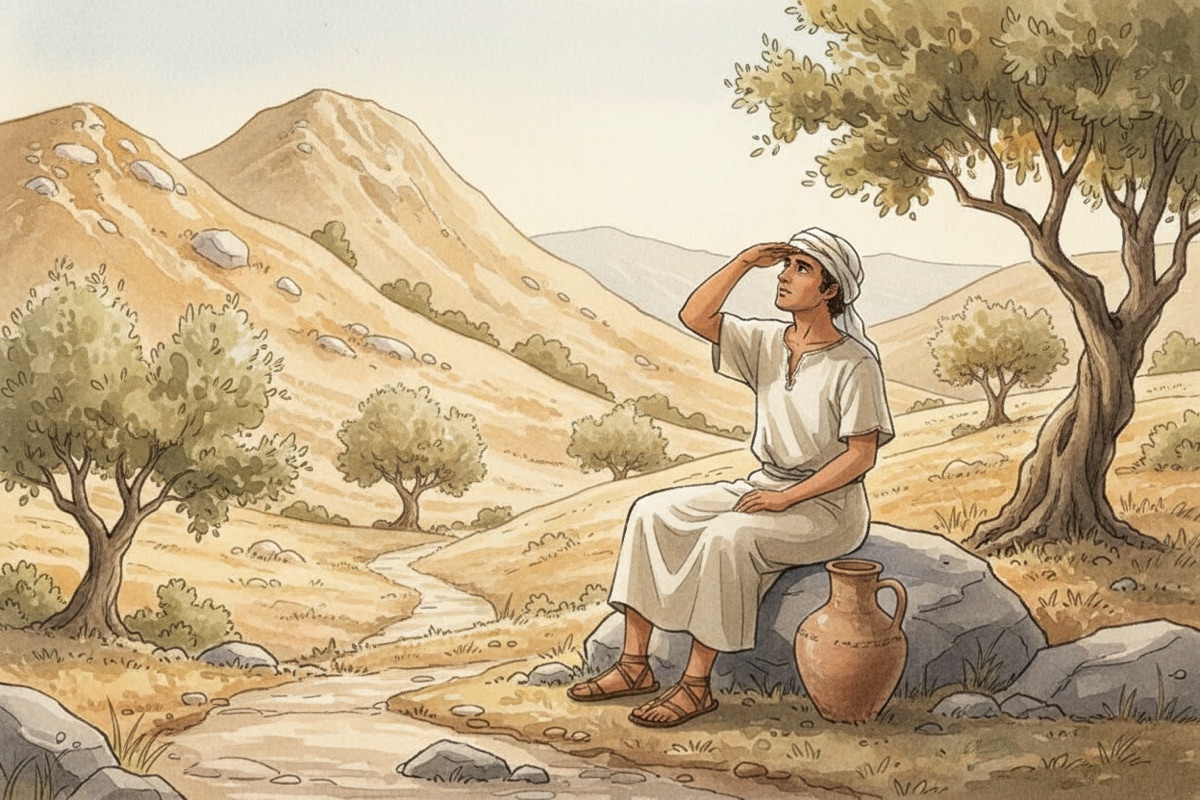
It starts with a question. The psalmist looks at the hills and asks where help will come from. The next line settles it: “My help comes from the LORD, the Maker of heaven and earth.” (Psalm 121:2, BSB).
The hills are big and old. They look like they could protect you. But the one who made them is bigger. The psalmist does not stop at the hills. He looks past them to their Maker.
This psalm carries the heading “A song of ascents,” one of fifteen psalms that do. Many readers understand these as songs for worshipers going up to Jerusalem for the feasts. Picture a family on foot for days, under a hot sun by day and out in the open at night. A traveler like that has plenty of reasons to wonder where help will come from.
Notice how the voice changes after verse 2. The first two verses are "I" and "my." From verse 3 on, it is "you" and "your." It sounds like a second voice answering the first, or like the psalmist preaching to himself. Either way, the promise is spoken to you directly: “He will not allow your foot to slip” (Psalm 121:3, BSB).
Why does it matter that God never sleeps?
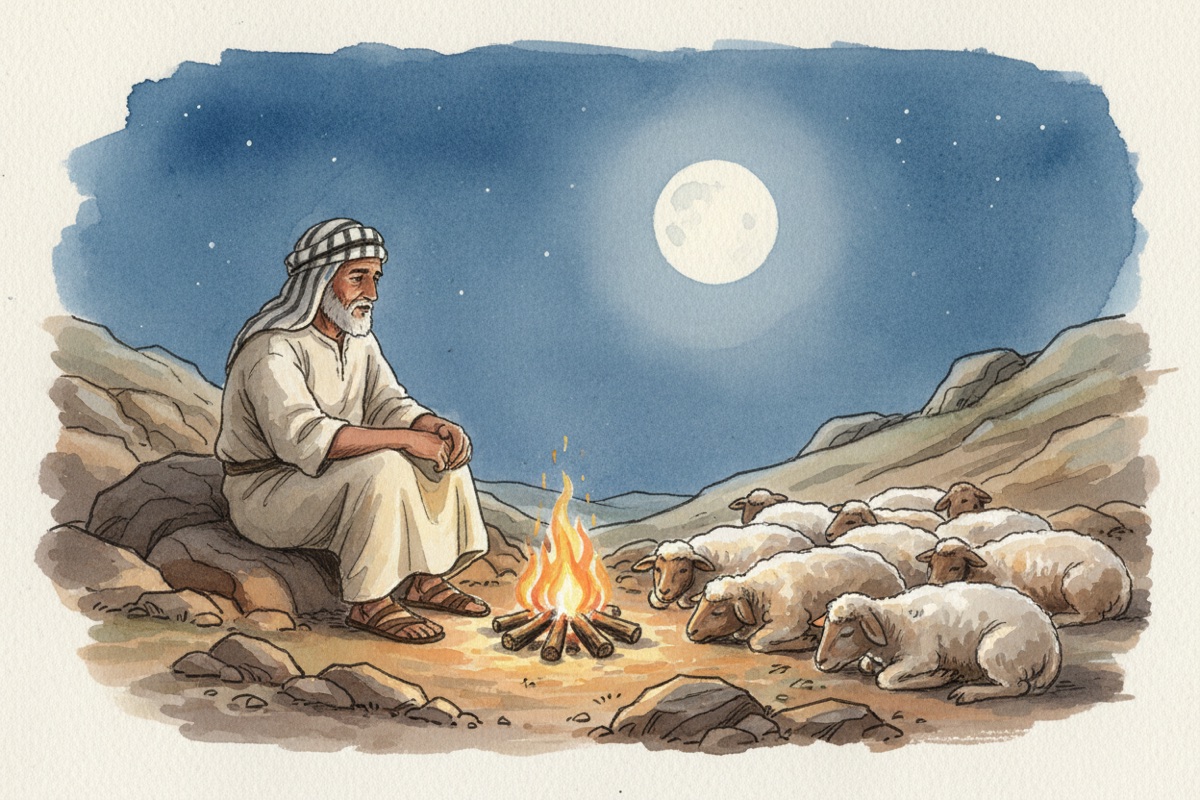
Because every other helper does. Your spouse sleeps. Your elders sleep. The friend who said "call me anytime" turns off the phone at night. You sleep too, and while you sleep you cannot watch anything.
The psalm says God is different: “Behold, the Protector of Israel will neither slumber nor sleep.” (Psalm 121:4, BSB). There is no shift change in heaven. When you finally fall asleep, nothing goes unguarded.
What does it mean that the LORD is your keeper?
It means He guards you all the time. In the Hebrew text one verb, meaning to keep or guard, appears six times in verses 3 through 8. The BSB translates it as "Protector," "keeper," "guard," "preserve," and "watch over." The psalm keeps saying the same thing in different words because people need to hear it more than once.
The images get practical: “the LORD is the shade on your right hand” (Psalm 121:5, BSB). In a hot land, shade can keep you alive. Then the psalm covers every hour: “The sun will not strike you by day, nor the moon by night.” (Psalm 121:6, BSB). Day and night, there is no gap in His care.
This is not a promise of an easy road. The same book holds psalms of grief and loss. What it promises is this: “He will preserve your soul.” (Psalm 121:7, BSB). Whatever happens on the road, your life is in His keeping.
What does Psalm 121 mean for you today?
It means your coming and going is already being watched. The last verse widens the promise to cover everything: “The LORD will watch over your coming and going, both now and forevermore.” (Psalm 121:8, BSB).
Coming and going is ordinary life. Leaving the house in the morning. The drive to the hospital. The meeting you would rather skip. The walk back to the car after a hard conversation. None of it happens outside His sight.
If you lead a church, you probably spend much of your week being someone else's help. People call you when the news is bad. It is easy to start believing that if you stop watching, things will fall apart. Psalm 121 gently corrects that. You are not the Protector of Israel. You can lift your eyes, name where your help comes from, and go to sleep.
So tonight, when your mind starts running through the list, try saying verse 2 out loud. Then let the One who does not sleep keep the watch.
A prayer
Lord, Maker of heaven and earth, I confess that I look to the hills for help. I look to my plans, my people, and my own strength. Turn my eyes to You. Thank You that You do not slumber or sleep. Keep my feet from slipping this week. Guard my going out and my coming in, and give me rest tonight, knowing that You are awake.
Questions for reflection
- What "hills" do you tend to look to for help before you look to the LORD?
- Where in your coming and going this week do you most need to remember that God is watching over you?
Try Sermoneer
One sermon becomes a week of material: small group guide, devotional, social cards, and shorts.
Start free