
Devotional
Matthew 11:28-30 Devotional: Rest for the Tired Pastor
Matthew 11:28-30 is Jesus' invitation to anyone worn out by a load they cannot carry. Jesus offers his own yoke in place of that load, and himself as the teacher, gentle and humble in heart. The rest he promises is rest for your souls, found by coming to him and learning from him.
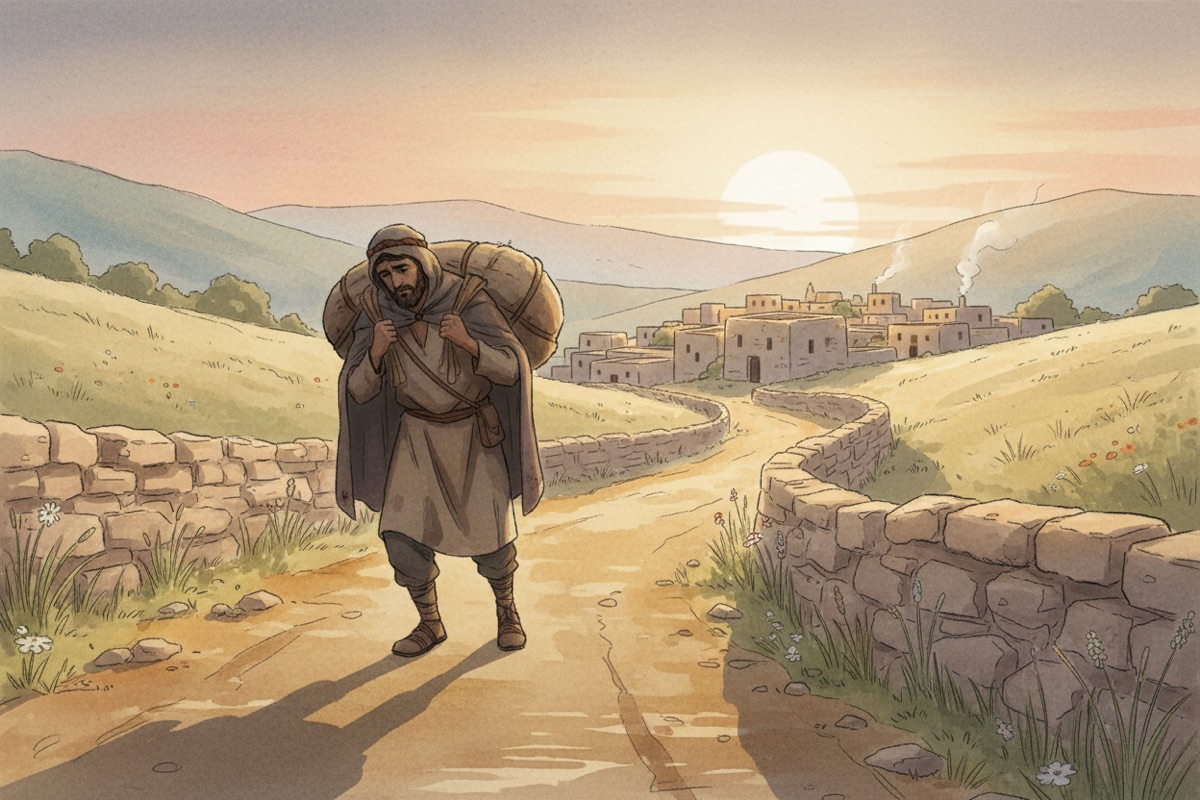
You can carry a great deal and still look fine on Sunday morning. You shake hands at the door. You remember the name of someone's grandson. Then Sunday night comes, the building is dark, and you notice how much you have been holding all week. The phone call you have not returned. The feeling that the whole church rises or falls on you.
What does Matthew 11:28-30 say?
In Matthew 11:28-30, Jesus invites weary and burdened people to come to him and take his yoke, because he is gentle and humble and his burden is light.
Come to Me, all you who are weary and burdened, and I will give you rest. Take My yoke upon you and learn from Me, for I am gentle and humble in heart, and you will find rest for your souls. For My yoke is easy and My burden is light. (Matthew 11:28-30, BSB)
He does not say, "Try harder." He does not say, "Pull yourself together." He says, "Come to Me." The tired person's part is simply to come, and it is a small step.
What was happening in Matthew 11?
Matthew 11 is a chapter of disappointment, and the invitation comes at the end of it. It opens with John the Baptist in prison, sending a hard question.
Meanwhile John heard in prison about the works of Christ, and he sent his disciples to ask Him, “Are You the One who was to come, or should we look for someone else?” (Matthew 11:2-3, BSB)
Then Jesus turns to the towns where he had done the most. Matthew says plainly that Jesus “began to denounce the cities in which most of His miracles had been performed, because they did not repent” (Matthew 11:20, BSB). The people who saw the most did not respond.
Then Jesus prays. He thanks the Father for hiding these things “from the wise and learned” and revealing them “to little children” (Matthew 11:25, BSB). Right after that prayer, he speaks to anyone who is tired.
The chapter that follows shows what kind of burden he meant. In Matthew 12, the Pharisees watch the disciples pick grain on the Sabbath and say, “Look, Your disciples are doing what is unlawful on the Sabbath” (Matthew 12:2, BSB). Later Jesus says of the same kind of teachers, “They tie up heavy, burdensome loads and lay them on men’s shoulders, but they themselves are not willing to lift a finger to move them” (Matthew 23:4, BSB).
What is the yoke Jesus offers?
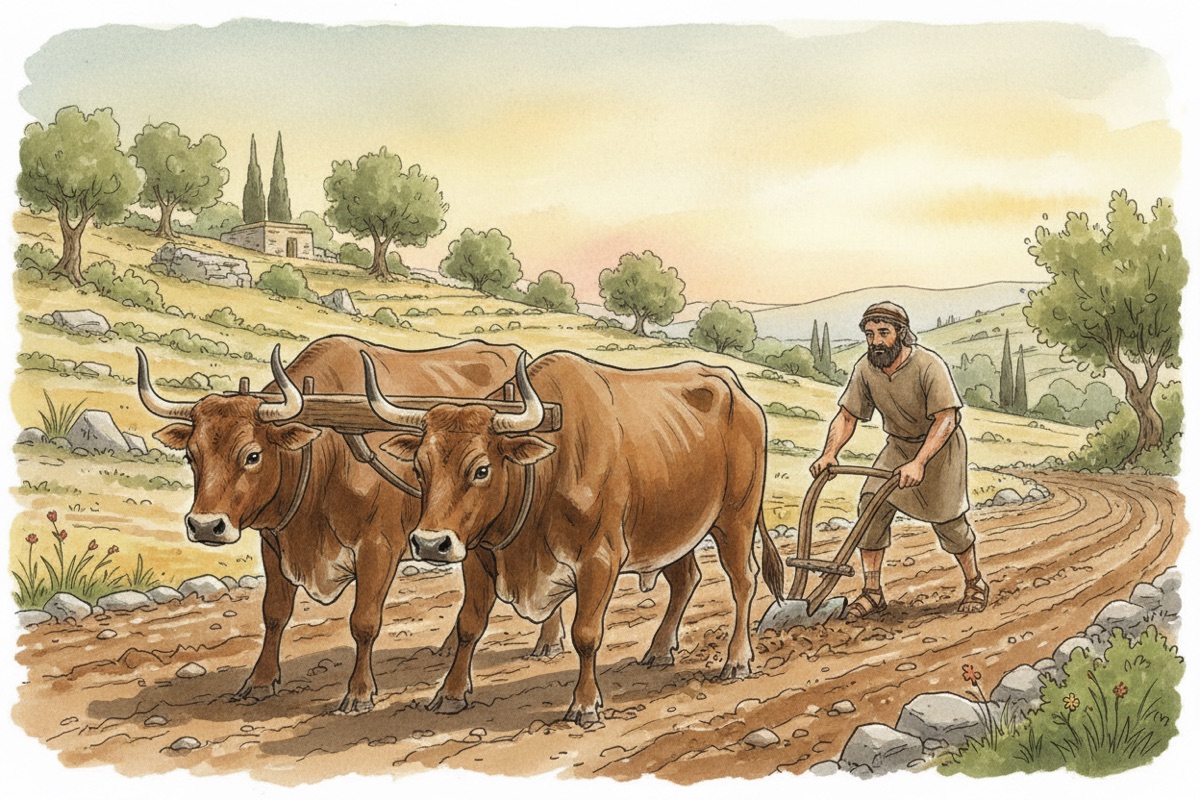
The yoke is life under Jesus' teaching, and he offers it in place of the heavy loads others had tied on people. A yoke was a wooden beam fitted over the necks of working animals so they could pull together. It was made for work.
Notice that Jesus does not take the yoke away. He says, “Take My yoke upon you” (Matthew 11:29, BSB). The rest he promises still has work in it. You still follow, still obey, still serve. What changes is whose yoke it is and who is teaching you how to carry it.
His words also echo an old promise. Through Jeremiah, God told his people, “Ask for the ancient paths: ‘Where is the good way?’ Then walk in it, and you will find rest for your souls” (Jeremiah 6:16, BSB). Jesus uses that same phrase, rest for your souls, and points to himself as the way to find it.
Why is Jesus' yoke easy?
Jesus' yoke is easy because of the one who gives it. He ties it to his own character: “I am gentle and humble in heart” (Matthew 11:29, BSB). Before he says anything about the load, he tells you what kind of teacher he is.
Some teachers in Jesus' day piled on rules and then stood back. Jesus does the opposite. When he saw the crowds, “He was moved with compassion for them, because they were harassed and helpless, like sheep without a shepherd” (Matthew 9:36, BSB). A gentle master does not drive his people into the ground.
This is where many pastors need to slow down. Much of what you carry was never his assignment: being the answer to every problem in the church, or making every sermon the one that finally turns things around. Those are heavy loads, and you may have tied some of them on yourself.
The work under his yoke is real. You will still preach and still sit with people in their worst weeks. But the savior of your church is Christ, and that weight was never yours to carry.
What does rest look like this week?
Rest starts the way Jesus said it would: by coming to him. That can be as plain as telling him what you are carrying, one thing at a time, out loud.
Then take one load and ask honestly whether it is his yoke or one you picked up somewhere else. If it is his, ask him for help carrying it. If it is not, ask him for the courage to set it down, or to hand it to someone else in the church.
Then learn from him. Read a chapter of Matthew slowly and watch how Jesus treats tired and struggling people. Notice how often he stops for them. If Monday is usually the hardest day, you may also find help in this piece on the Monday blues for pastors.
A prayer
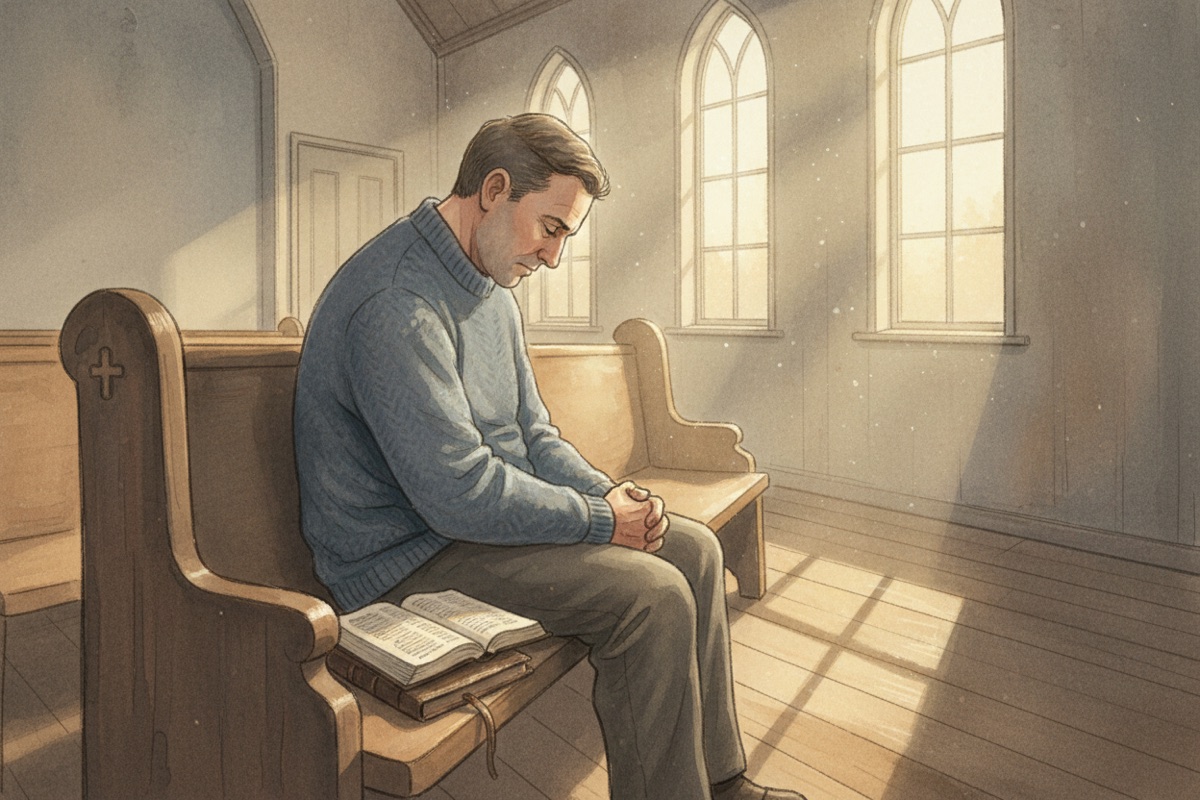
Lord Jesus, you said, "Come to Me," and I am coming. I am tired, and I have been carrying things you never asked me to carry. Show me which loads are yours and which are mine to put down. Teach me to work under your yoke and not under the weight of everyone's expectations. You are gentle and humble in heart. Let me learn from you this week, and give my soul the rest you promised.
Questions for reflection
- Which burden on your mind right now came from Jesus, and which ones did you pick up somewhere else?
- What would it look like this week to "learn from" Jesus the way you would learn from a gentle teacher?
Try Sermoneer
One sermon becomes a week of material: small group guide, devotional, social cards, and shorts.
Start free