
Devotional
Joshua 1:9 Devotional: Be Strong and Courageous
Joshua 1:9 is God's command to Joshua as he takes Moses' place: “Have I not commanded you to be strong and courageous? Do not be afraid; do not be discouraged, for the LORD your God is with you wherever you go.” (Joshua 1:9, BSB). The courage God asks for rests on one fact. He goes with Joshua.
Think about the first Sunday after a beloved pastor retires. The new pastor walks up to the pulpit. Everyone in the room is quietly comparing. Some of them have known the old pastor for forty years. The new one knows that, and his hands are not quite steady.
Joshua stood in a harder spot than that.
What was happening when God spoke Joshua 1:9?
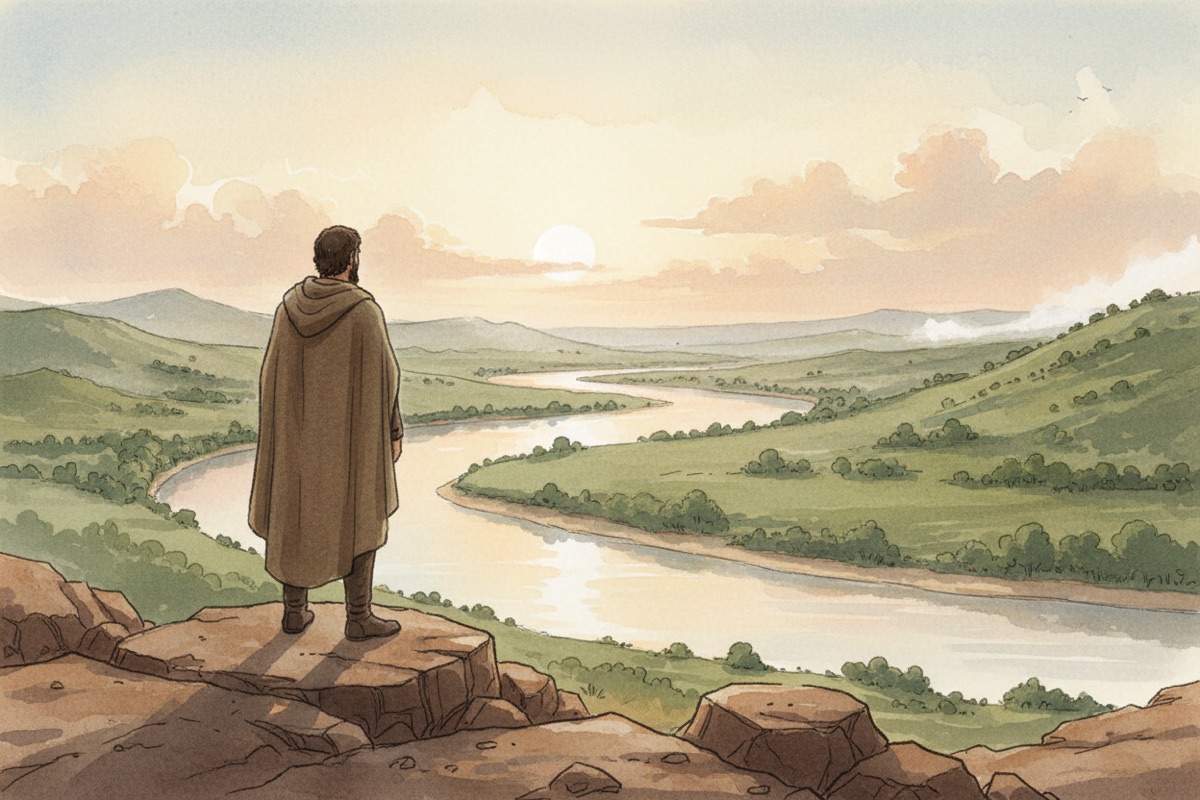
Moses had just died, and Joshua had to lead Israel across the Jordan in his place. The chapter opens with a plain sentence from God: “Moses My servant is dead.” (Joshua 1:2, BSB).
For forty years Moses had been the one who spoke with God and carried the people's complaints. He had stood before Pharaoh and come down from the mountain with the law. Joshua had been his assistant. Now the assistant was in charge, the river was in front of him, and a whole nation was waiting to see what he would do.
God did not give Joshua a pep talk about his gifts. He gave him a command and a reason.
Why does God say "be strong and courageous" three times?
God says it three times, and each time He ties it to something different. In verse 6 God says, “Be strong and courageous, for you shall give these people the inheritance of the land that I swore to their fathers I would give them.” (Joshua 1:6, BSB). In verse 7 He says it again, stronger: “Above all, be strong and very courageous.” (Joshua 1:7, BSB). In verse 9 He asks, “Have I not commanded you to be strong and courageous?” (Joshua 1:9, BSB).
Joshua had heard these words before. Shortly before his death, in front of all Israel, Moses had told him, “Be strong and courageous” (Deuteronomy 31:7, BSB). Then the LORD Himself commissioned Joshua with the same command and promise: “Be strong and courageous, for you will bring the Israelites into the land that I swore to give them, and I will be with you.” (Deuteronomy 31:23, BSB). Now Moses is gone, and God says it again.
Notice what each command is tied to. In verse 6 it is the land God promised. In verse 7 it is the law. In verse 9 it is God's presence. Joshua's courage is never left floating on its own.
What does courage have to do with the Book of the Law?
In Joshua 1, courage includes the strength to keep obeying God. God tells Joshua, “Be careful to observe all the law that My servant Moses commanded you. Do not turn from it to the right or to the left, so that you may prosper wherever you go.” (Joshua 1:7, BSB).
Then He adds, “This Book of the Law must not depart from your mouth; meditate on it day and night, so that you may be careful to do everything written in it.” (Joshua 1:8, BSB).
We usually picture courage as the soldier at the front of the line. Joshua would need that kind. But the kind God spells out here is different: the courage to keep doing what God said and not turn aside to the right or the left. Joshua's strength for the hard days ahead would come from God's words in his mouth, day and night.

Why does God's presence make Joshua courageous?
Joshua could be courageous because God promised to go with him. That is the reason at the end of verse 9: “for the LORD your God is with you wherever you go.” (Joshua 1:9, BSB).
God had already said it in verse 5: “As I was with Moses, so will I be with you; I will never leave you nor forsake you.” (Joshua 1:5, BSB). That speaks to the obvious question Joshua faced. He was not Moses, and God never asked him to be. Moses' strength had always been God's presence with him. That same presence was now promised to Joshua.
What does Joshua 1:9 ask of you today?
Joshua 1:9 was spoken to Joshua for a specific task, and it is worth reading that way first. You are not leading a nation across the Jordan. But the promise underneath the command is given to God's people again in the New Testament. Hebrews 13:5 takes up the same promise and gives it to believers: “Never will I leave you, never will I forsake you.” (Hebrews 13:5, BSB). The next verse draws the conclusion: “The Lord is my helper; I will not be afraid.” (Hebrews 13:6, BSB).
So you can bring your own river to this verse. Maybe you are following someone who was loved and long remembered. Maybe there is a meeting this week you would rather skip, or a hard word you know you need to say.
God's answer is the same one He gave Joshua: I am with you. Then He tells you to keep His word close, in your mouth and on your mind, so that you do not drift to the right or the left.
A prayer
Lord, You see the river in front of me and You know how afraid I am. I am not who came before me, and You have not asked me to be. Keep Your word in my mouth and on my mind. When I want to turn aside, hold me steady. Give me courage that rests on You, because You have promised to be with me wherever I go.
Questions for reflection
- Where are you comparing yourself to someone who came before you?
- What part of God's word do you need to keep close this week so you do not turn to the right or to the left?
Try Sermoneer
One sermon becomes a week of material: small group guide, devotional, social cards, and shorts.
Start free