
How-To
How to Turn a Sermon Into a Youth Group Lesson
To turn a sermon into a youth group lesson, keep the passage and cut the sermon to one point a student could repeat. Replace the adult illustrations with ones from their week. Then plan the time so students spend at least as long reading and talking as the leader spends teaching, and finish with one concrete thing to do.
Say it is Sunday afternoon. Your youth leader is a volunteer with a full-time job, and the group meets on Wednesday night. You have a finished sermon, with the passage studied and the main point clear. The leader has a search engine and a blank page.
Giving that leader your manuscript will not help much. A 30-minute sermon for adults is long and dense, and it was written to be heard in a pew. But the study behind it is the hard part, and that study can be reused.
What makes a youth lesson different from a sermon?
A youth lesson is a conversation with some teaching in it. A sermon is mostly one voice. In a youth room, the students need to find things in the text and say them out loud, or the leader ends up doing all the talking.
Three differences matter when you rework a sermon:
- One point. A sermon can carry three points. A lesson should carry one, because the discussion will wander and needs a single place to come back to.
- Their week. Adult sermons lean on mortgages, marriages, and careers. Students live with group chats, tryouts, shifts at a first job, and moving between two homes.
- Fewer assumptions. Some of the students grew up in church. Some came with a friend and do not know what a Levite is. The lesson has to work for both.
How do you turn a sermon into a youth lesson, step by step?
Start with your notes and the passage, and work through these steps, alone or with your youth leader.
- Write the sermon's main point in one sentence. If you need two sentences, choose one. Use words a seventh grader uses.
- Keep the passage and trim the reading. Stay in the text you preached. If it is long, choose the part that carries the point and summarize the rest in a sentence or two.
- List the words students will trip over. Write a one-line explanation for each. Include the background they need to follow the story, such as how Jews and Samaritans saw each other.
- Throw out most of the illustrations. Keep one if it works for a 14-year-old. For the rest, ask the youth leader what is going on in the students' lives.
- Write a short teaching section. Aim for ten to twelve minutes. Explain what the text says, then say the one point plainly.
- Write five questions. Two about what the text says, two about what it means, and one about their week.
- Choose one response. Give them something a student can do before the next meeting, without a car or money.
- Put it on two pages. A volunteer should be able to read it once on a lunch break and lead from it.
What does a finished 45-minute lesson look like?
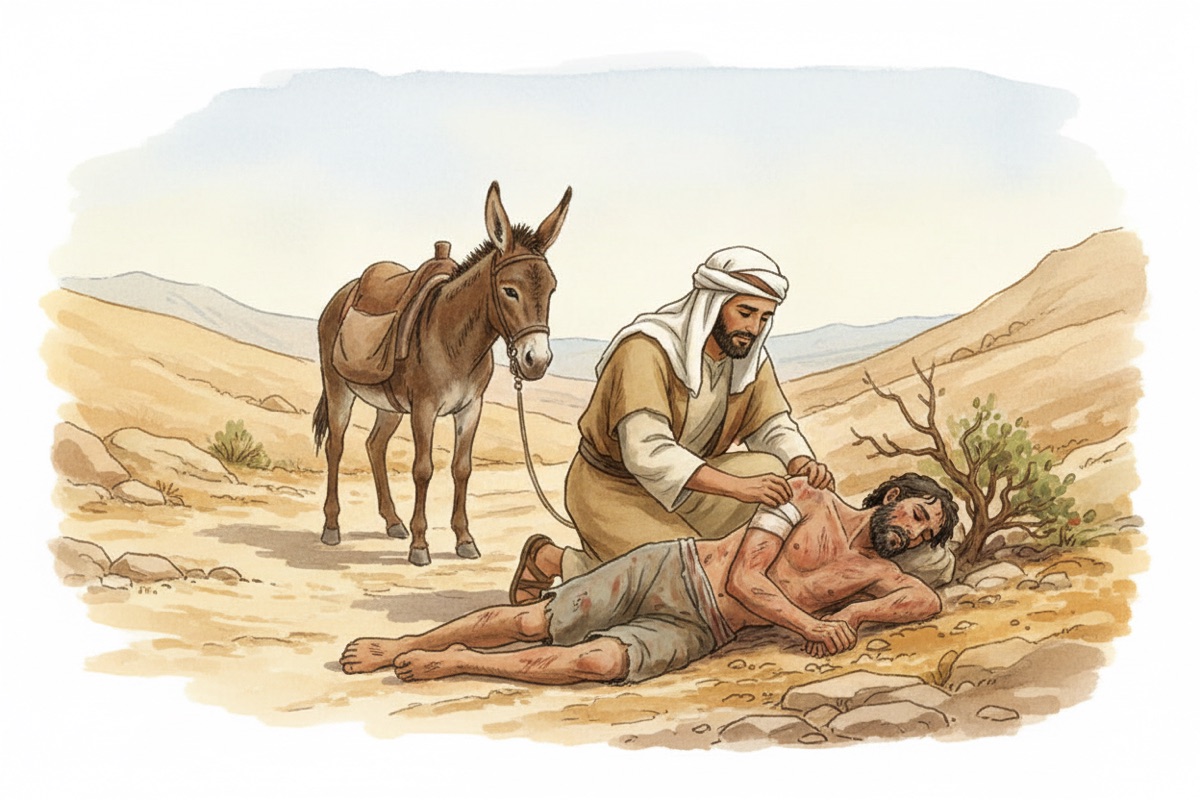
Here is an invented example. Say you preached on the parable of the good Samaritan, and your sermon's main point was that God's mercy breaks the limits we put on who counts as our neighbor.
The one point: God has been merciful to us, so we don't get to choose who counts as our neighbor.
Opener (8 minutes). Ask: "When has someone you didn't expect helped you?" The leader answers first, with a short, true story that is fine to tell teenagers.
Read (5 minutes). Read Luke 10:25-37 with students taking parts: narrator, Jesus, and the expert in the law. Before you read, explain two things. Priests and Levites served at the temple, so people would likely look to them to do right. Jews and Samaritans had a long history of hostility. Don't say yet how that matters to the story.
Teach (12 minutes). Point to the question that starts the story: “And who is my neighbor?” (Luke 10:29, BSB). Luke says the man asked it to justify himself. Then read how Jesus answers with a question of His own.
“Which of these three do you think was a neighbor to the man who fell into the hands of robbers?” “The one who showed him mercy,” replied the expert in the law. Then Jesus told him, “Go and do likewise.” (Luke 10:36-37, BSB)
Earlier in Luke, Jesus ties our mercy to God's: “Be merciful, just as your Father is merciful.” (Luke 6:36, BSB). Tell students about the mercy God has shown us, as your sermon did. Then say the one point and stop.
Discuss (15 minutes).
- What did the priest and the Levite do? What does the text say about why?
- List everything the Samaritan did for the man. What did it cost him?
- In verse 29 the expert asks who his neighbor is. In verse 36 Jesus asks which of the three was a neighbor. What is different about those two questions?
- How would the story change if the man who stopped had been another Levite?
- What are some ways a person gets passed by at school or online? (No names, and no descriptions that point to one person.) What would it look like to stop?
Respond (5 minutes). Each student thinks of one person and one small act of mercy for this week. It should be safe and doable: sitting with someone at lunch, sending a kind message, including someone who gets left out. They do not have to say it out loud. Then say this plainly: mercy never means staying close to someone who is hurting you, or keeping quiet about it. Tell an adult you trust. Sometimes mercy means getting help, and the Samaritan brought the man to an inn. Close in prayer.
Look at question 1 again. The text does not say why the priest and the Levite passed by. Students will guess, and that is fine, as long as the leader helps them see that Luke doesn't tell us.
If you have less than 45 minutes, cut the teaching before you cut the discussion. With half an hour, try 5 minutes for the opener, 5 to read, 6 to teach, 10 to discuss, and 4 to respond.
How do you write questions teenagers will answer?
Start with easy questions about the text, then ask some the leader cannot answer for them. Students can tell when a question is a quiz. If the only right answer is "God" or "pray more," they will wait for someone else to say it.
A few habits help:
- Start with what they can see. "What did he do first?" can be answered by a student who has never opened a Bible.
- Ask "where" and "what" before "why." Those are easier.
- Leave room for doubt. "What bothers you about this story?" tells a student that being bothered is allowed.
- Wait. Count to ten before you rescue the question.
- Keep the personal question optional. A student should always be able to pass.
One caution. Honest questions sometimes bring out serious things. Before anyone leads a discussion with minors, they should know your church's child protection policy, who to tell, and what the law in your state requires them to report. No leader should promise to keep a secret when someone may be hurt. Have at least two screened adults in the room. If a student is in immediate danger, call 911. For thoughts of suicide, call or text 988. Then report as your policy and state law require.
Should the youth group study the same passage as the adults?
Usually yes, when the passage allows it. If parents heard the text on Sunday and their students studied it on Wednesday, they can talk about it in the car without anyone preparing anything. A family discussion guide on the same sermon can help with that.
It also saves the youth leader from hunting for a new topic every week, and it lets your study serve more people. If your students sit in the service, skip any illustration they already heard and start with what they remember. But there are good reasons to break the pattern. Your youth group may be in its own series. Some topics need a smaller room, or a conversation with parents first. And if something hard has happened at the local school, set the lesson aside. Talk with parents, and with people trained in crisis care, about what your students need first.

Where do youth lessons from a sermon go wrong?
Many go wrong by staying too close to the sermon, and some by drifting from its text. Watch for these:
- The shrunken sermon. Same three points, fewer minutes. Cut to one.
- Moral without mercy. "Be nice to people" is an easy landing for a youth lesson. If your sermon had grace in it, keep it in the lesson. Students who know they are loved have a reason to go and do likewise.
- Borrowed cool. Skip slang you don't normally use. If you have to look up a phrase, leave it out.
- Too much activity. An opener that runs 25 minutes leaves the text as an afterthought.
- No handoff. Call the leader for five minutes when you send the file. Say what you most want students to see, and ask what looks hard to teach.
Which Sermoneer drafts can you start from?
You can start from a small group draft or a sermon outline. Sermoneer has no separate youth lesson. It has two tools that give you a starting draft, and both need a person who knows your students to finish the work.
To start from the sermon you preached:
- Add your sermon. Upload a PDF, .docx, or .txt file, paste the text, or use a YouTube link to a video with captions.
- Open the Small Group tab. The draft has a bottom line, an icebreaker, four discussion questions, one step for the week, and prayer prompts.
- Copy it or download the .docx. There is also a Leader Guide download, made for the person leading the group. Both are written for a general small group, so rework either one.
- Rework it for students. Use the bottom line as your one point, in simpler words. Replace the icebreaker and the story question with ones from a student's week. Check the other questions too, because they refer to things you said in the sermon, and some students may not have heard it. Check each Bible quotation, or change it to the translation your students read.
To start from a passage instead, open Outline, enter the passage, set the audience to Youth, and set Main points to 1. You get a sermon outline draft aimed at that audience, with no discussion guide. Read it against the text before you hand it to anyone, then add the questions yourself.
You can try the first on this week's sermon and the second on its passage. Sermoneer is free while in beta, and you can sign up here. Then call your youth leader before Wednesday.
Try Sermoneer
One sermon becomes a week of material: small group guide, devotional, social cards, and shorts.
Start free