
Pastor's Life
How to Handle Criticism After a Sermon
To handle criticism after a sermon, listen first and thank the person without defending yourself. Later, find the actual claim inside the comment. Test that claim against the text and your recording, not against how sharply it was said. Then decide what to change. The tone belongs to the other person. The claim is what you are responsible for.
It is easy to react to the tone instead. A gentle comment gets taken seriously. A sharp one gets dismissed, or it ruins the whole week. Both reactions skip the one question that matters: is it true?
Why does criticism after a sermon hurt so much?
Because preaching is personal in a way most work is not. You studied the text, prayed over it, and then stood up and said it in front of people you love. A comment about the sermon can feel like a comment about your calling.
Timing makes it worse. Criticism often arrives when you have the least left. It comes at the door after the last service, or in an email on Sunday night. You are drained, and your mind is still replaying the sermon. A small remark can sound much bigger than it is.
None of that means you are too sensitive. It means you should not make decisions about criticism in the same hour it arrives.
What should you say when someone criticizes your sermon?
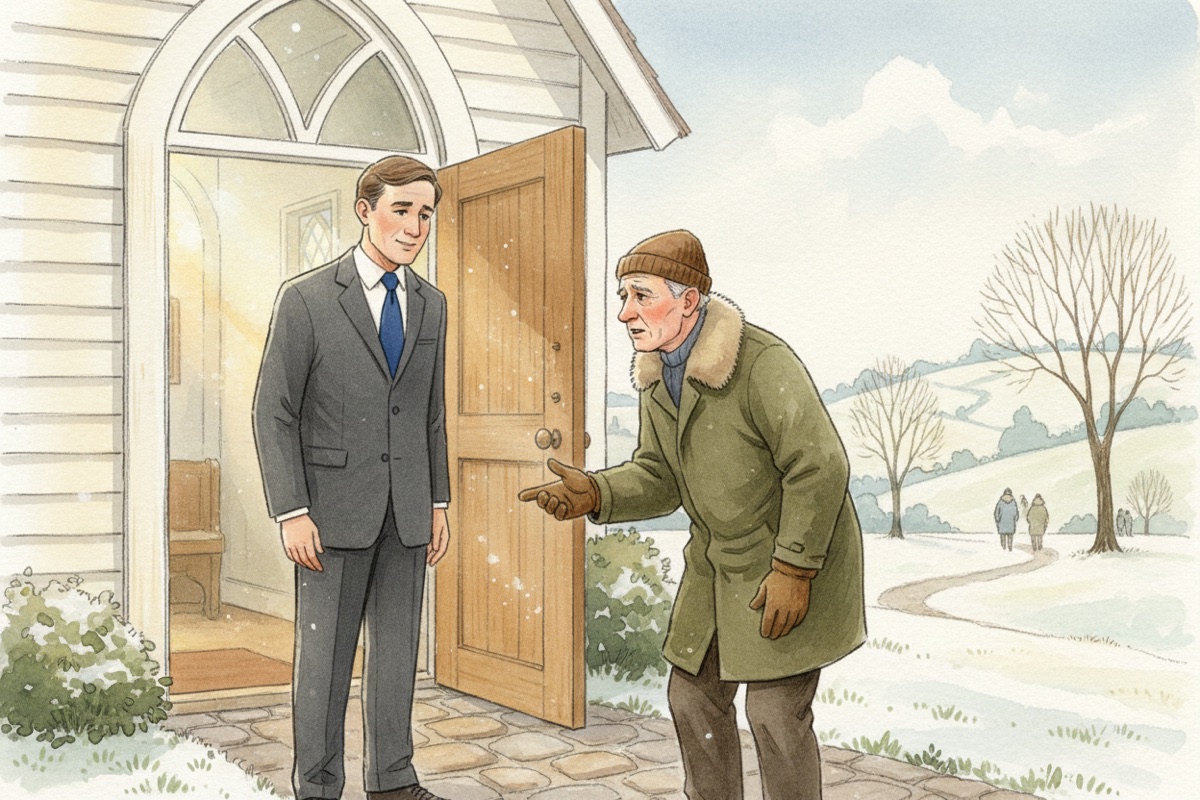
Say thank you, ask one question, and stop there. Something like: “Thank you for telling me. Can you say a little more about what you mean?” Then listen to the whole answer.
You are not agreeing by doing this. You are just making sure you understand what the person is actually saying before you respond to it. James puts it plainly: “Everyone should be quick to listen, slow to speak, and slow to anger” (James 1:19, BSB).
What you should not do at the door:
- Defend the sermon point by point.
- Explain what you meant to say.
- Bring up the people who told you they loved it.
- Promise a change you have not thought through.
Every one of those feels natural. Every one of them turns a comment into an argument. And arguments at the door after church tend to go badly for everyone, including the people standing in line behind the critic.
Proverbs puts it simply: “A gentle answer turns away wrath, but a harsh word stirs up anger” (Proverbs 15:1, BSB).
How do you tell if criticism of your sermon is fair?
Write the claim down in one plain sentence, without the tone. Then check that sentence on its own.
Say a man stops you after church and says, a little too loudly, “You twisted that passage to make your point.” The tone is accusing. But underneath it there is a claim you can test: your main point did not come from the text. So test it. Reread the passage. Look at your outline. Did your big idea actually come out of the verses, or did you bring it in and look for verses to hold it up?
Or say a kind woman emails to say, “I loved the sermon, but I think you misquoted the verse about worry.” The tone is warm. The claim is just as testable: you quoted the verse wrong. Look it up. Listen to the recording.
Most sermon criticism falls into a few kinds, and each kind gets checked differently:
- About the text. You misread it, quoted it wrong, or said something it does not say. Check the passage and your notes.
- About clarity. People could not follow you, or did not know what you wanted them to do. Check the recording, or ask someone who was there.
- About care. Something you said hurt someone, or landed badly on a person in a hard season. Here the hurt itself is the information. Do not filter it out as tone. Talk with the person directly, and listen before you explain.
- About preference. The sermon was too long, too loud, too many stories, not enough stories. Note it, and watch whether it comes up again from different people.
The point of sorting is to stop treating every comment the same way. A text error gets fixed, and a hurt gets a visit, while a preference can wait to see if it comes up again. If you are not sure which kind you are looking at, ask one person you trust to read the comment with you.
What if the criticism is right?
Then thank the person again and change what needs changing. Being corrected in public can feel like losing standing. More often it shows the church that you take the text more seriously than your record.
If you said something wrong about the text in front of the whole church, a short word the next Sunday is often enough. “Last week I said this verse meant X. I looked at it again, and that was not right. Here is what it says.” Thirty seconds. Then move on.
Proverbs has a line that sounds strange at first: “The wounds of a friend are faithful, but the kisses of an enemy are deceitful” (Proverbs 27:6, BSB). A hard word from someone who loves you, even said clumsily, can do you more good than easy praise.
Many of these mistakes can be caught before Sunday. Read your manuscript once with the open Bible beside it, checking every quote and every claim about what the text says.

What if the criticism is unfair or unkind?
Answer it gently, keep it short, and do not let it set your agenda. You checked the claim and it does not hold up. You can say so in one or two sentences, with kindness, and leave it there.
You do not owe anyone a long debate by email. Email is a poor place to settle a disagreement about a sermon. If a conversation is needed, offer to meet in person or talk on the phone.
Paul knew what it was to be judged by the church he served. Some in Corinth were ranking their leaders against each other, and Paul answered: “I care very little, however, if I am judged by you or by any human court. In fact, I do not even judge myself. My conscience is clear, but that does not vindicate me. It is the Lord who judges me” (1 Corinthians 4:3-4, BSB).
Paul is not giving permission to ignore correction. He says his own clear conscience does not settle it either. His point is that neither the critic nor his own feelings get the final word. That frees you from two traps: being crushed by unfair comments, and being sure you are right just because you feel defensive.
There is one exception to keeping it small. If one person's comments turn into personal attacks week after week, or into a campaign against you, that is no longer feedback about sermons. Bring in an elder or another leader. You should not carry that alone, and it is not good for the person either. This is different from several people raising the same concern. That deserves to go to your elders too, as a question about your preaching, not about them.
Who should you actually listen to about your preaching?
Start with the people you have asked. Criticism you did not ask for will always come. You will weigh it better if you also have feedback you did ask for.
Pick two or three people who love the church and will tell you the truth. One could be a mature member. One could be someone younger or newer who hears things differently. Once a month or so, ask each of them a few specific questions:
- What was the main point of the sermon, in one sentence?
- Was there a place where you got lost?
- Did anything I said seem to go beyond what the passage says?
Specific questions get specific answers. “How was the sermon?” gets “Good, pastor.”

Then, when an unexpected comment arrives, you have something to compare it with. If the people you asked have been saying the same thing, take it seriously. If no one else has noticed anything like it, you can hold a comment about style or length more loosely. A comment about the text is different. Check it either way, because one person can catch a misquote everyone else missed.
When should you deal with sermon criticism?
Not on Sunday, and not first thing Monday. Write the comment down so you do not have to keep carrying it in your head. Then come back to it midweek, when you are rested and can read it as a claim instead of a blow. The article on Monday blues for pastors explains why the day after you preach is a poor time to judge anything.
You will not get every call right. Some criticism you dismiss will turn out to be true. Some you take to heart will turn out to be one person's bad week. That is part of the work. Keep listening to the text and to your people, and let the Lord be the one who judges.
Try Sermoneer
One sermon becomes a week of material: small group guide, devotional, social cards, and shorts.
Start free